Glass epoxy laminates have become one of the most popular types of materials used in the field of electrical and electronics engineering owing to the excellent properties they exhibit due to the perfect blend of mechanical strength, insulation, and thermal stability.Glass epoxy laminates have become one of the most popular types of materials used in the field of electrical and electronics engineering owing to the excellent properties they exhibit due to the perfect blend of mechanical strength, insulation, and thermal stability. These types of laminates are produced through the process of fusing glass fabric along with epoxy resin together at high temperatures.
In this blog post, we will be discussing the factors responsible for making glass epoxy laminates popular and their applications/industries along with the role played by the fiberglass insulated cables and laminated insulation paper composites as an alternative to glass epoxy laminates in electrical applications.
What Are Glass Epoxy Laminates?
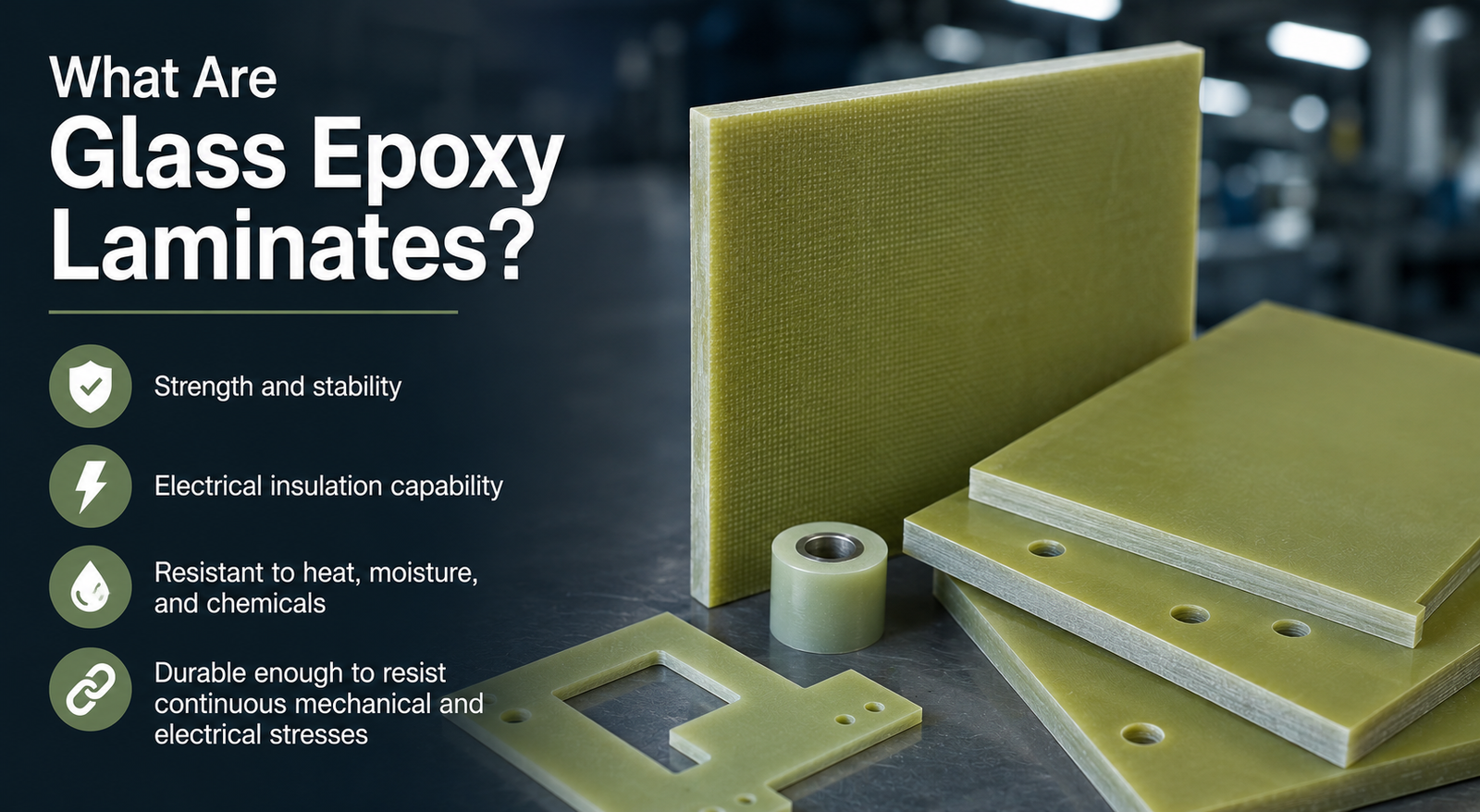
Glass epoxy laminate materials are composite types produced by laying woven fiberglass sheets with an epoxy resin that undergoes curing through heating and compression, resulting in a tough plate with the following features:
- Strength and stability
- Electrical insulation capability
- Resistant to heat, moisture, and chemicals
- Durable enough to resist continuous mechanical and electrical stresses
As such, glass epoxy laminates become the ideal material for use in applications where electrical insulation and structural strength are necessary.
Key Properties That Drive Their Use
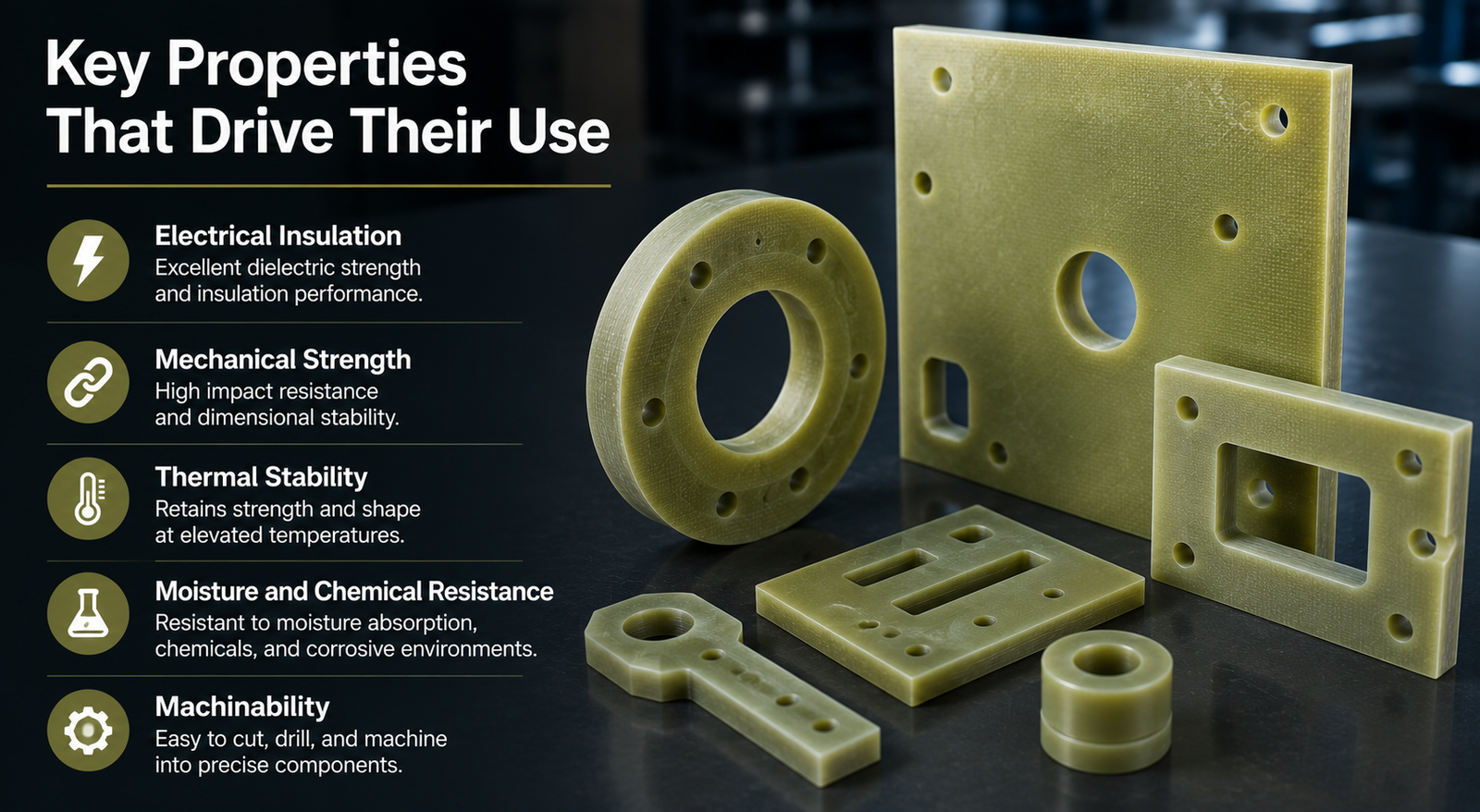
1. Electrical Insulation
Glass-epoxy laminate material provides good dielectric strength, making it suitable for insulating electrical components from each other in order to avoid any unnecessary electric current. Such features play an important role in such areas as circuit boards, switchgear, and transformers.
2. Mechanical Strength
In contrast to many other insulation materials, glass epoxy laminates possess sufficient structural stiffness. That is why these materials can be used for two purposes – both as insulators and as parts which bear loads or retain shape.
3. Thermal Stability
These glass epoxy laminates retain their insulation and mechanical properties over a wide range of temperatures; thus, they can be used in situations where the machine produces much heat while running.
4. Moisture and Chemical Resistance
These types of laminates do not absorb moisture easily because of their composition and thus they are chemically resistant. They can be employed in areas that have humidity.
5. Machinability
Glass epoxy laminates can be cut, drilled and machined to make custom parts according to the requirements of the assembly.
Common Applications of Glass Epoxy Laminates
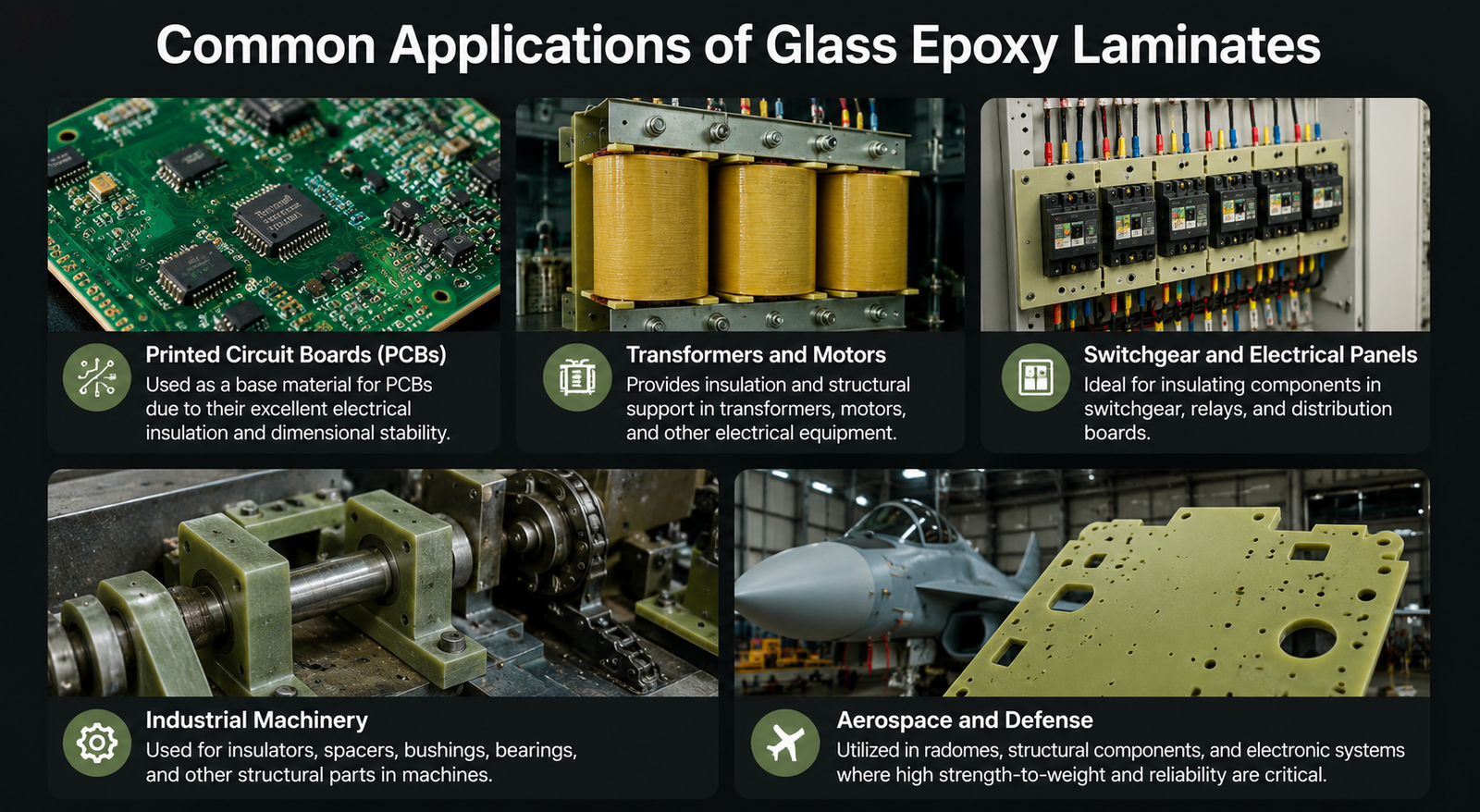
1. Printed Circuit Boards (PCBs)
One of the best known uses of the glass epoxy laminate is in the fabrication of printed circuit boards. Materials like the FR4 (flame retardant glass epoxy laminate) are the rigid base material for most of the circuit boards used in electronic components currently.
2. Transformers and Motors
The glass epoxy laminates find applications as insulating material for transformers and motors where they help to provide insulation by separating windings and supporting coils.
3. Switchgear and Electrical Panels
The glass epoxy laminate functions both as insulation as well as a supporting medium in the switchgear assembly to avoid the occurrence of arcing and safety clearance in high voltage assemblies.
4. Industrial Machinery
Apart from their usage in electrical assemblies, glass epoxy laminates are used in mechanical parts where electrical insulation along with strength is required, such as in terminal blocks, bushings, and mountings of machinery.
5. Aerospace and Defense
Glass epoxy laminates find applications in aerospace and defense sectors owing to their strength and stability.
Complementary Materials: Fiberglass Insulated Cables
and Laminated Insulation Paper Composites
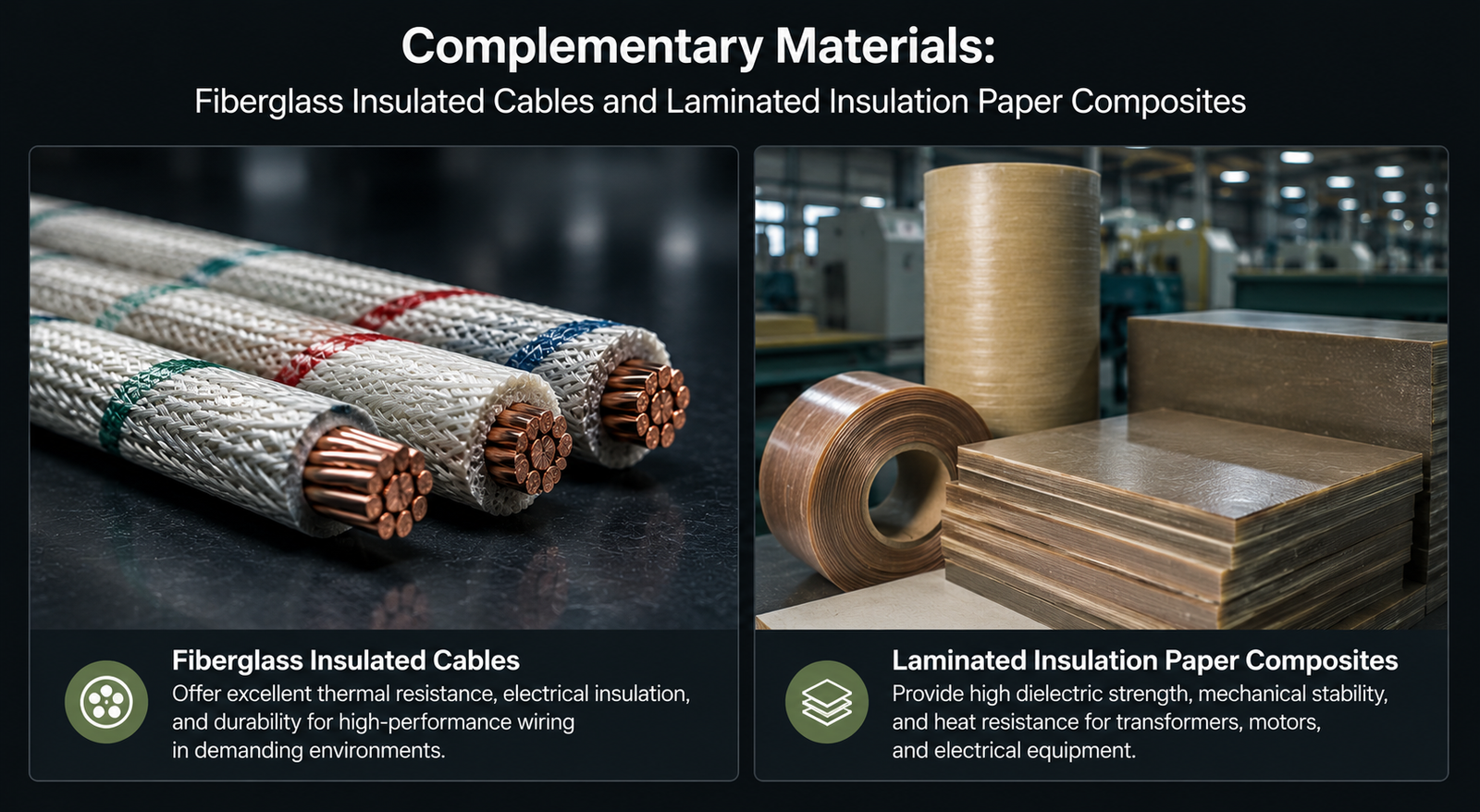
While the glass epoxy laminates give rigid insulating structures, electrical designs often have to employ more than one material for total protection. There are two materials that are commonly used together with the glass epoxy laminates in the field of electricity: fiberglass insulated cables and laminated insulation papers.
Fiberglass Insulated Cables
In the case of fiberglass insulated cables, these types of cables are protected through braiding or coating of the conductors with fiberglass insulation to safeguard them against heat, wear, and electrical dangers. For systems that utilize glass epoxy laminate panels, the fiberglass insulated cables are often used in wiring runs between the components.
This combination is especially valuable in:
- Industrial control panels, where laminates constitute the mounting material and fiberglass cables conduct wiring runs under heat conditions
- Transformers and motors, where laminates offer structural insulation and fiberglass cables conduct internal and external connections
- Electric power generation systems, where both materials have to function under thermal stress all the time
Laminated Insulation Paper Composites
Laminated insulation paper composites are made up of insulating paper combined with some other material which may be films or fabrics. Such composites are usually used along with glass epoxy laminates in the transformer and motor insulation systems. Layered insulation techniques help better in distribution of thermal and electrical stresses as compared to use of a single material.
In many transformers and generators, laminated insulation paper composites are used for winding insulation, while glass epoxy laminates are used for structural elements such as end rings, spacers, and support blocks.
Why Combining Materials Matters
There is no insulation that is ideal for all areas of an elaborate electrical system. The use of glass epoxy laminate is ideal when it comes to structural or rigid insulation, but wiring insulation is another area which requires a special material, and this is when fiberglass insulated cables are used. In case of winding insulation of transformers and motors, laminated insulation paper composites are more favorable than laminate boards.
In order to achieve this, it is important to know the complementing nature of the materials.
Choosing the Right Glass Epoxy Laminate Grade
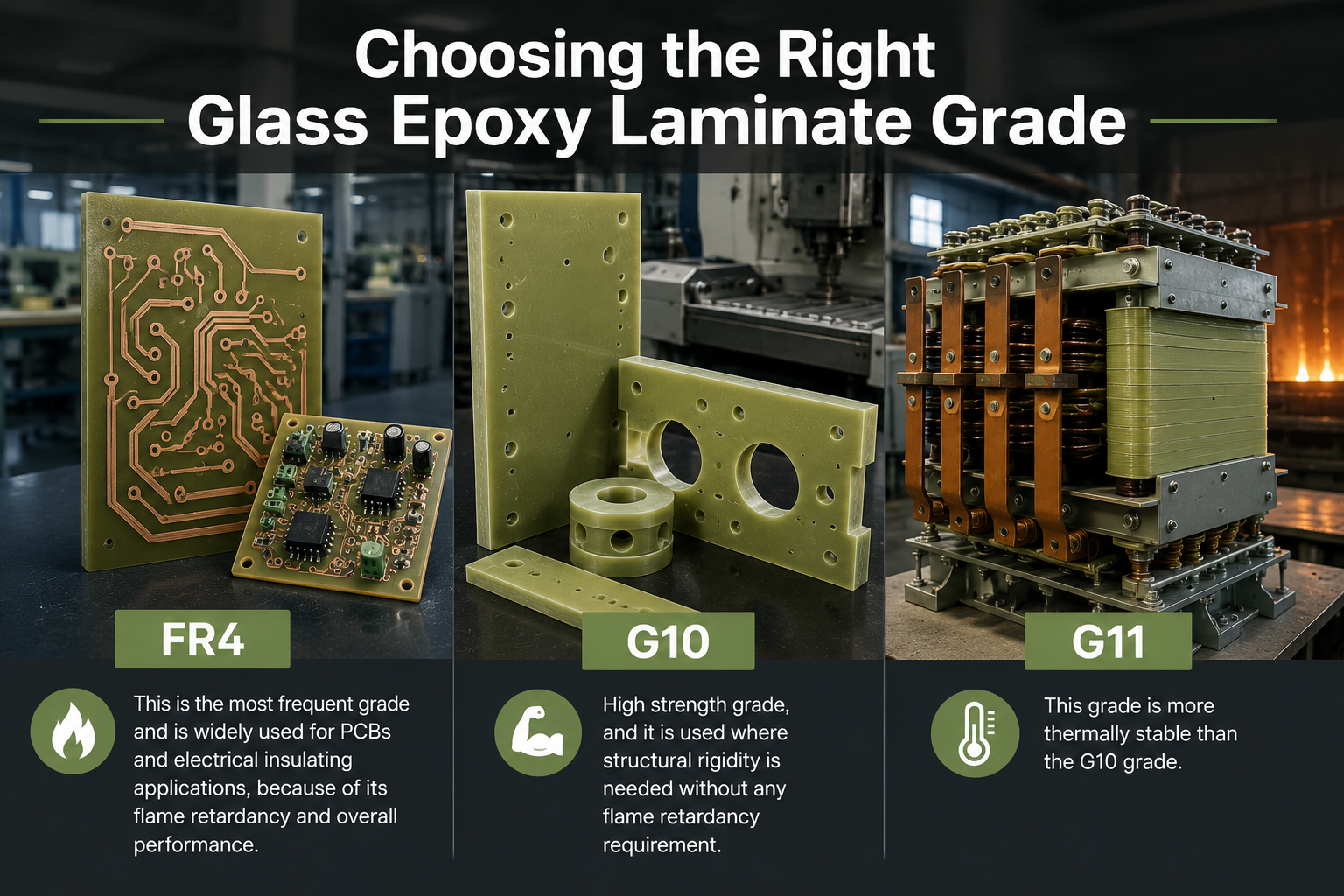
Glass epoxy laminates come in multiple grades, each suited to different applications:
- FR4 – This is the most frequent grade and is widely used for PCBs and electrical insulating applications, because of its flame retardancy and overall performance.
- G10 – High strength grade, and it is used where structural rigidity is needed without any flame retardancy requirement.
- G11 – This grade is more thermally stable than the G10 grade.
Choosing the right grade is determined by several aspects including operating temperature, mechanical loading, electrical needs, and certification within the respective industry.
Glass epoxy laminate materials are crucial to the field of electrical and electronic engineering as they help solve an issue that few other materials can deal with: combining electrical insulating properties and mechanical toughness in one product. Whether it is printed circuit boards, transformers, switchgear, or aerospace applications, glass epoxy laminates provide the required structure to keep the electrical system safe and operational.
At the same time, designing the insulation system does not require using a single material. Combining glass epoxy laminates with such additional products as fiberglass insulated cables and laminated insulation paper composite materials enables engineers to create a system that will cover all possible layers of electrical and heat insulation needs from rigid structures to flexible cables and winding insulation.
FAQ’S
1. What are some of the common applications of glass epoxy laminates?
The major applications of glass epoxy laminates include PCBs, transformers, motors, switchgears, electrical panels, industry machinery, and even aerospace industry.
2. What are the key benefits of glass epoxy laminates?
Key benefits of glass epoxy laminates include excellent electrical insulation, mechanical strength, thermal stability, resistance to moisture and chemicals, and machinability.
3. Explain the differences between FR4, G10 and G11 glass epoxy laminate types?
FR4 type is flame retardant and is commonly used in PCB and other electrical insulations. G10 is used in applications where mechanical strength is required but there is no need for flame-retardant grade.
4. In what way do fiberglass insulated wires complement glass epoxy laminates?
The glass epoxy laminates form a rigid structural insulation, while the fiberglass insulated wires offer protection to the wires from the heat, mechanical damage and electrical damage. Thus, a complete insulation system is achieved using these two materials.
5. Why is it necessary to use laminated insulation paper composites along with glass epoxy laminates?
Laminated insulation paper composites are usually used as a winding insulation in transformers and motors, whereas glass epoxy laminates form the structural part.