Silver jewelry is beautiful when it is clean and shiny. But after a while silver rings, chains, earrings, bracelets and pendants can become dark or dull. This is known as tarnishing.
Silver tarnishes by reacting with things in the environment, including sulfur-containing compounds in the air. The dark layer is mainly silver sulfide.
The good news is that most daily silver jewelry can be cleaned at home using simple materials. However, the kind of jewelry should dictate the cleaning method. Jewelry with gemstones, delicate finishes, glued parts or silver plating is harder to clean than plain silver.
Here, you will find simple instructions on how to clean silver jewelry at home, and things to avoid.
Why Does Silver Jewelry Turn Black
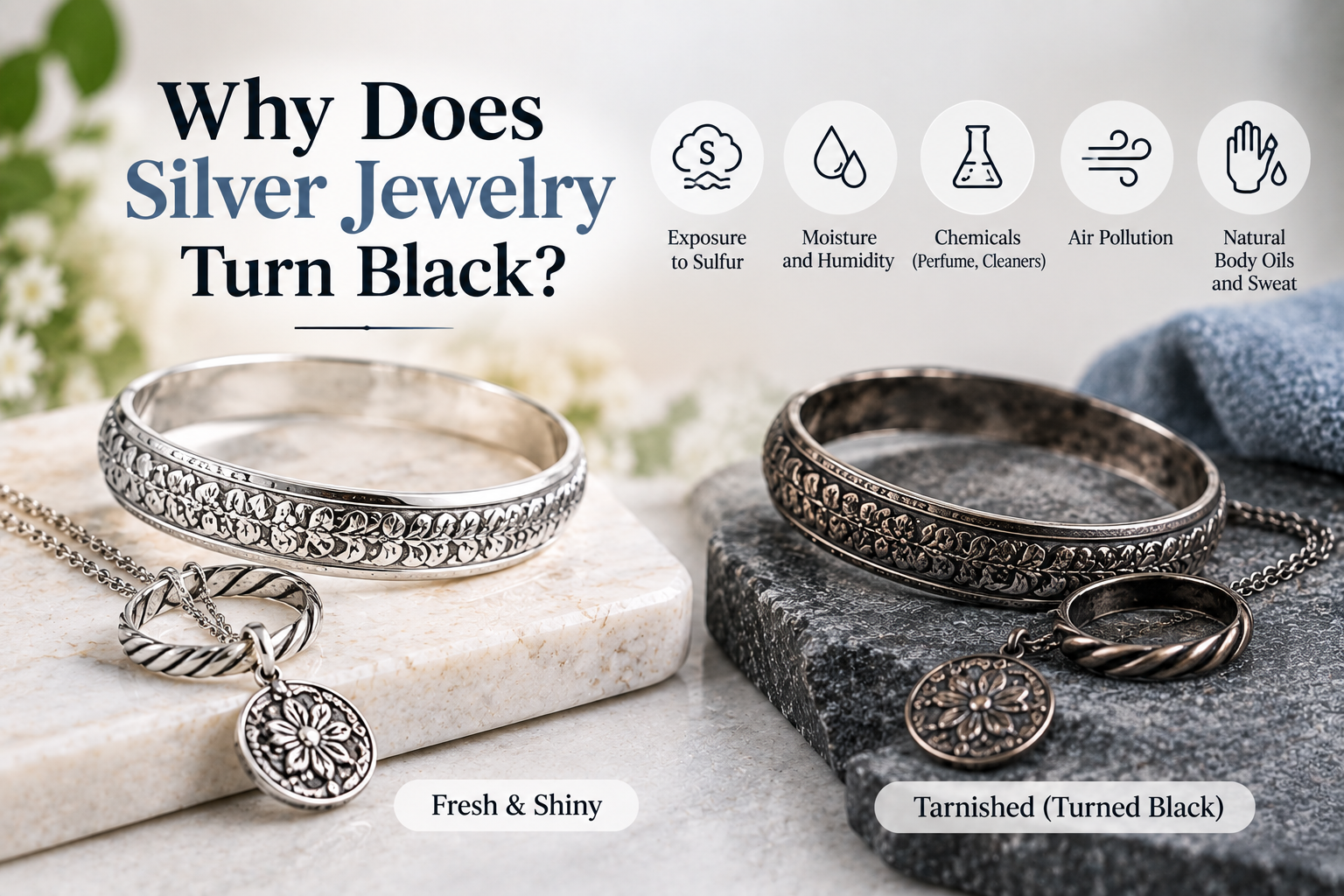
Silver does not commonly turn black due to being dirty. Often the darkness is caused by tarnish.
Air may contain sulfur compounds which react with the surface of the silver and silver sulfide is formed. Over time this can cause your silver jewelry to turn yellow, brown, gray or black.
Things that can make jewelry appear dirty or tarnished include:
- moisture.
- Exposure to air
- Sweat and sebaceous gland oils
- Perfume
- Cosmetics
- Household chemicals
- Long term storage
- Interaction with other drugs
Cleaning removes dirt and, where appropriate, tarnish from the surface.
How to Clean Silver Jewelry at Home
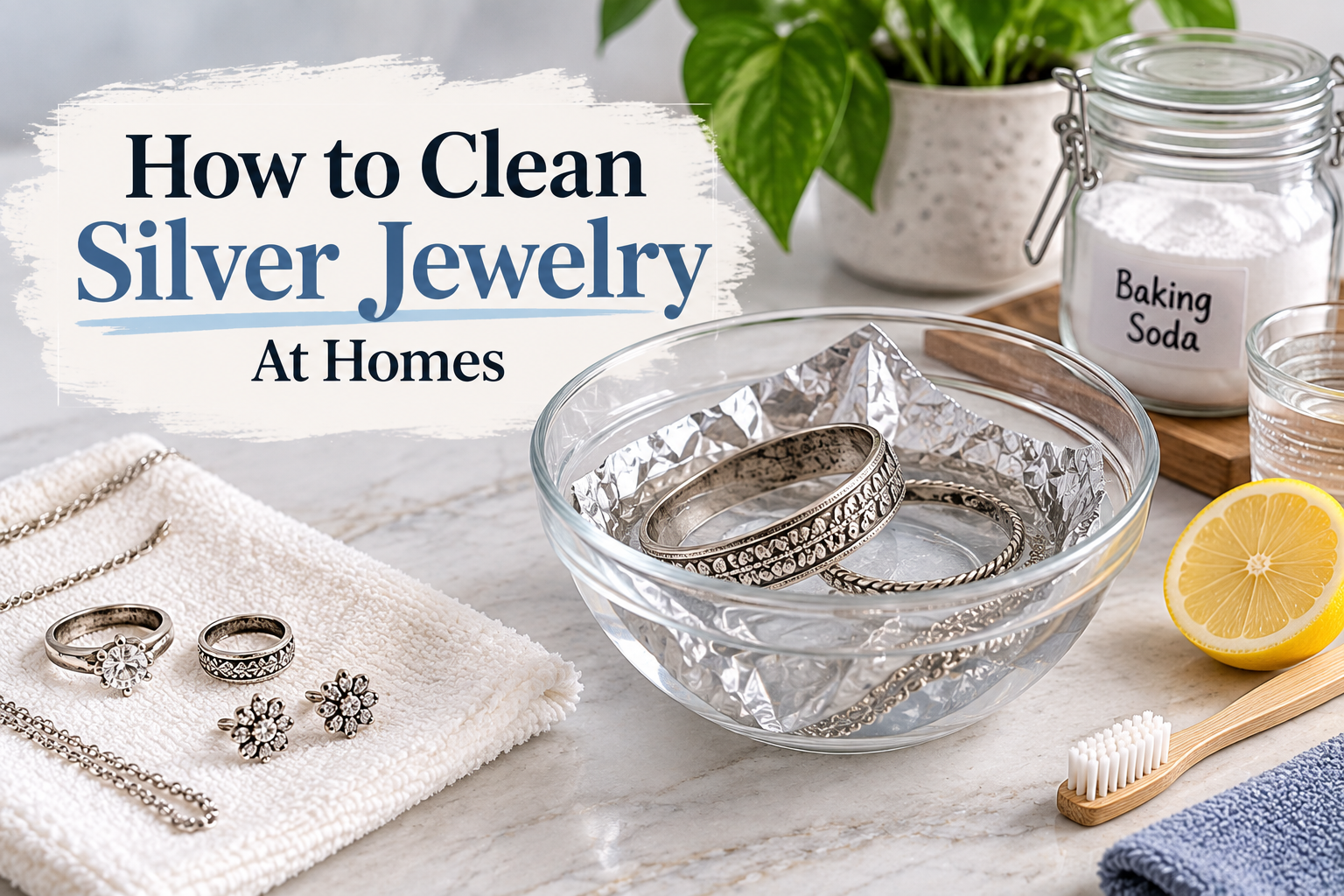
Simple silver jewelry does not need many things.
These you may keep at the ready:
- A clean, soft cloth
- small bowl.
- Warm water
- Some mild soap
- Soft toothbrush if required
- A dry, soft cloth
- A clean jewelry box or bag.
Many pieces do better with light cleaning than scrubbing. But conservation advice notes that polishing removes some silver as well as tarnish, so continued vigorous cleaning can gradually affect the surface.
If you are looking for different designs and styles, you can also explore Silver Jewelry Online before choosing the right piece for you.
How To Clean Silver Jewelry – Step by Step
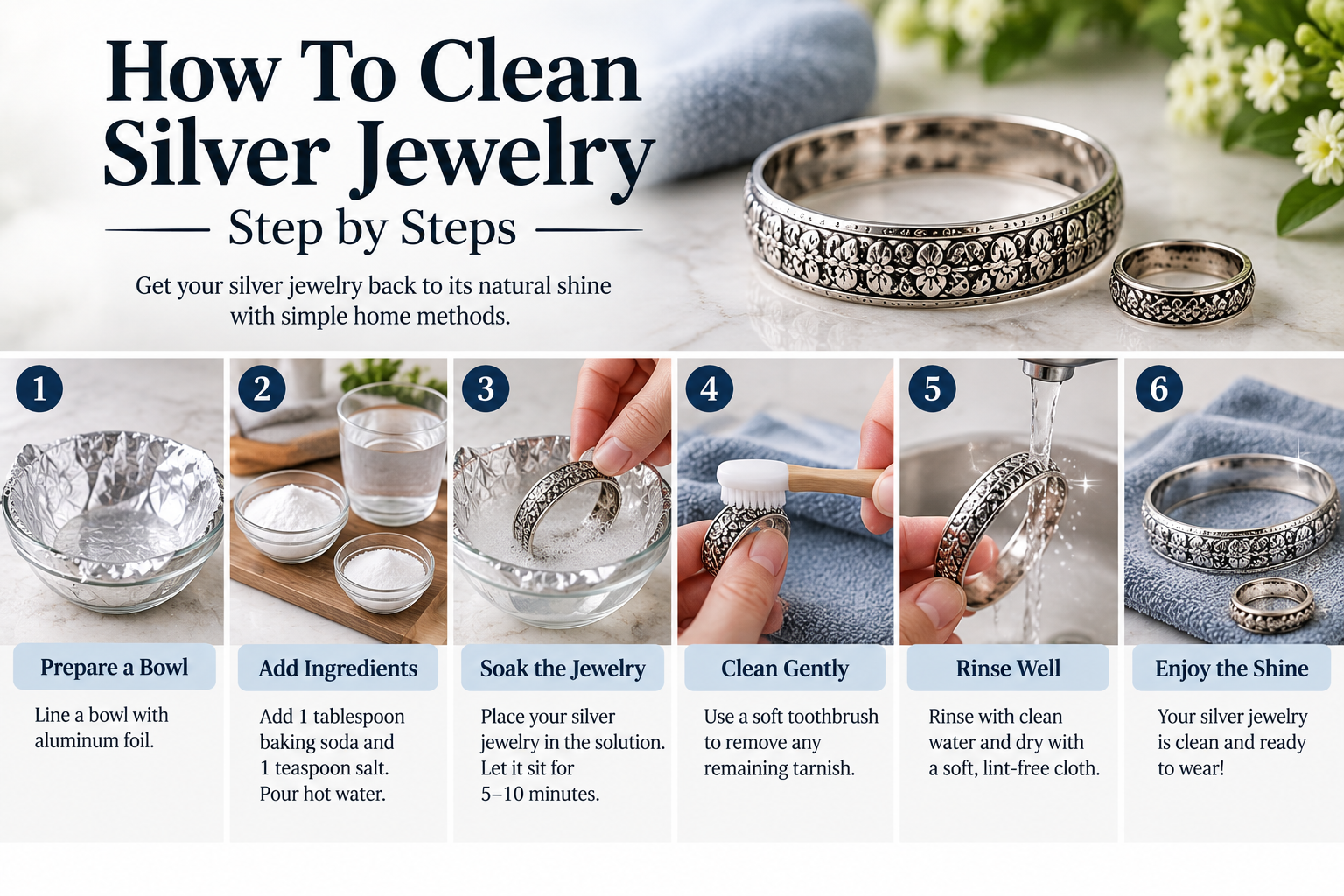
Step 1: Look at the Jewelry First
Make sure you look carefully before you clean your silver jewelry.
Confirm that it is:
- Silver (Pure)
- Silver, sterling.
- Plated silver
- Along with gemstones
- Made of pearls or other fine materials
- Finished with special finishes
Look also for hallmarks or other marks that will help identify the material. The Canadian Conservation Institute advises testing silver before cleaning, as various constructions and surface treatments may need different care.
Step 2: brush off any loose dirt
Using a soft, clean cloth, wipe the jewelry gently.
This will remove loose material such as dust, sweat, fingerprints etc. from the surface.
Do not scrub hard. Strong rubbing may cause scratches, especially on polished surfaces.
Step 3: Make Mild Soapy Water
Put some warm water in a small basin, and add a few drops of mild soap.
Mix well.
A gentle washing can help remove dirt and residues on normal silver items before treatment for tarnish. For appropriate silver items, the Canadian Conservation Institute recommends gentle washing, rinsing and careful drying.
Step 4: Clean the Jewelry Carefully
Place the appropriate plain silver jewelry in the soapy water for a short time and wash gently.
For small areas, use a very soft brush. Don’t push hard.
Note the following:
- Little corners
- Chain links
- Behind the pendant
- On settings
- Inscribed areas
Don’t use this soaking method on any jewelry containing materials that shouldn’t get wet.
Step 5: Rinse gently
Clean Jewelry After cleaning, rinse the jewelry carefully with clean water to remove soap.
Make sure there’s no soap left in the little crevices or around the setting.
Step 6: Let the Silver Jewelry Dry
Pat the jewelry dry with a soft towel.
Do not place wet jewelry directly into a closed jewelry box. Allow it to dry completely before putting it away.
Moisture can make it more difficult to care for jewelry and can cause surface problems at times.
How to Remove Tarnish from Silver
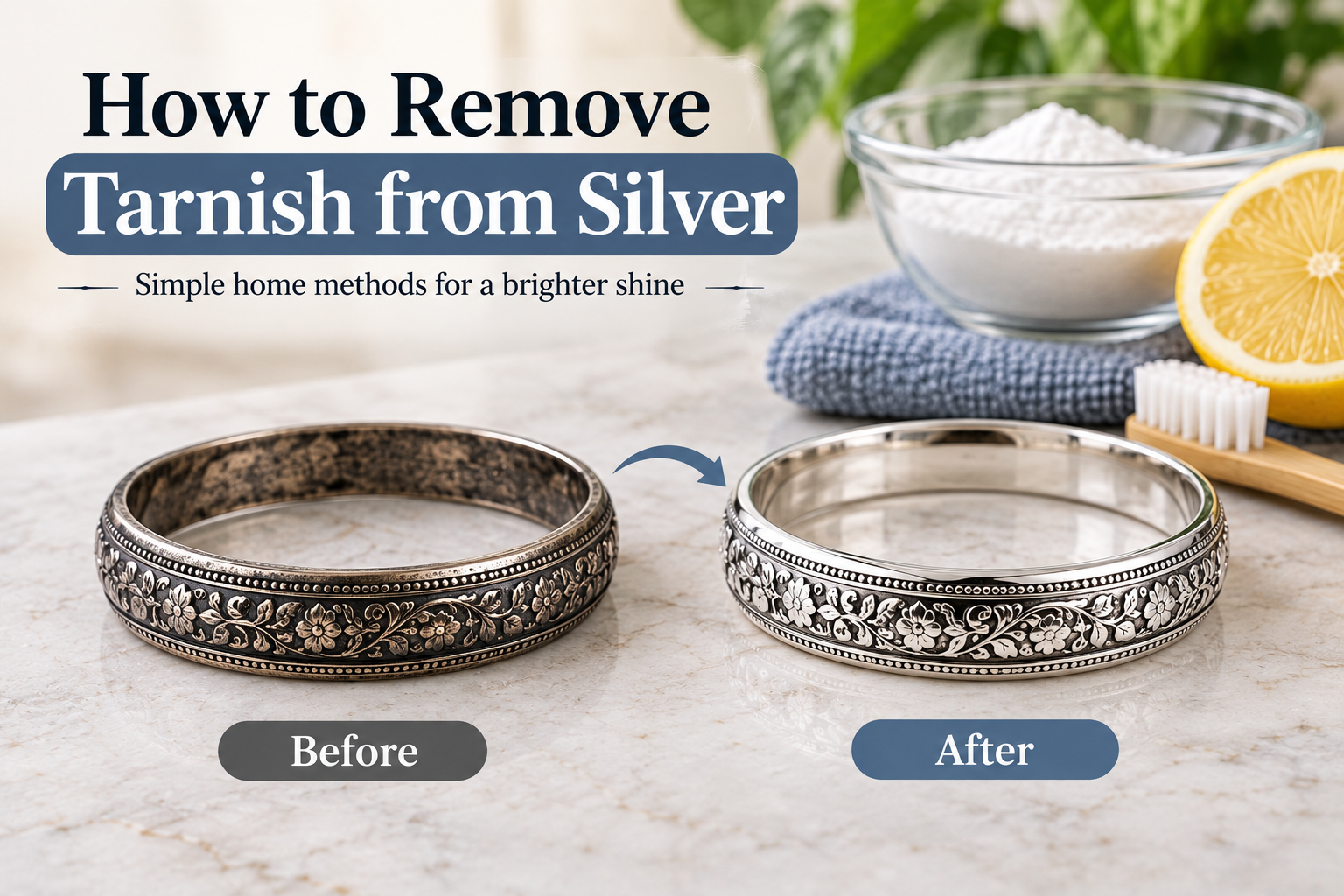
If your silver jewelry has only a little tarnish, a good silver polishing cloth or mild silver cleaning product may be all you need.
Silver polishes tend to be slightly abrasive. They take off the tarnish, but they also take off a little bit of silver and leave fine scratches. This is why silver should not be polished more often or more vigorously than is necessary.
If the silver jewelry is valuable, antique or unusual then it may be safer to have it professionally cleaned than to try a strong home treatment.
What about baking soda and aluminum foil?
There are online home cleaning methods that use baking soda, aluminum foil and hot water.
While these techniques may be useful for certain items of plain silver, they are not a guarantyd solution for all pieces of jewelry.
May be wearing jewelry:
- Gem Stones
- Decorative Coatings
- Silver plated
- Soldered components
- Other Metal
- Bonded assemblies
Some cleaning methods can damage these materials or alter the appearance of the jewelry. Conservation guidance specifically warns that immersion and chemical treatments are not suitable for all silver objects.
That’s why ordinary jewelry should be cleaned gently, and valuable or delicate pieces examined by a professional jeweler.
Cleaning Silver Jewelry: Types
| Jewelry Type | Care to be taken |
| Simple silver ring | Mild soap Water and soft cloth |
| Silver chain | Delicate washing and gentle drying |
| Silver Pendant | Soft cloth, gentle cleaning |
| Silver earrings | Gentle polishing of the surface |
| Silver bracelet | Gentle cloth and mild soap |
| Jewelry, silverplated | Extra care; don’t buff aggressively |
| Jewelry (gemstone) | Check stone and setting before using water or cleaners |
| Antique silver | Professional advice advised |
What Should You Not Do When Cleaning Silver?
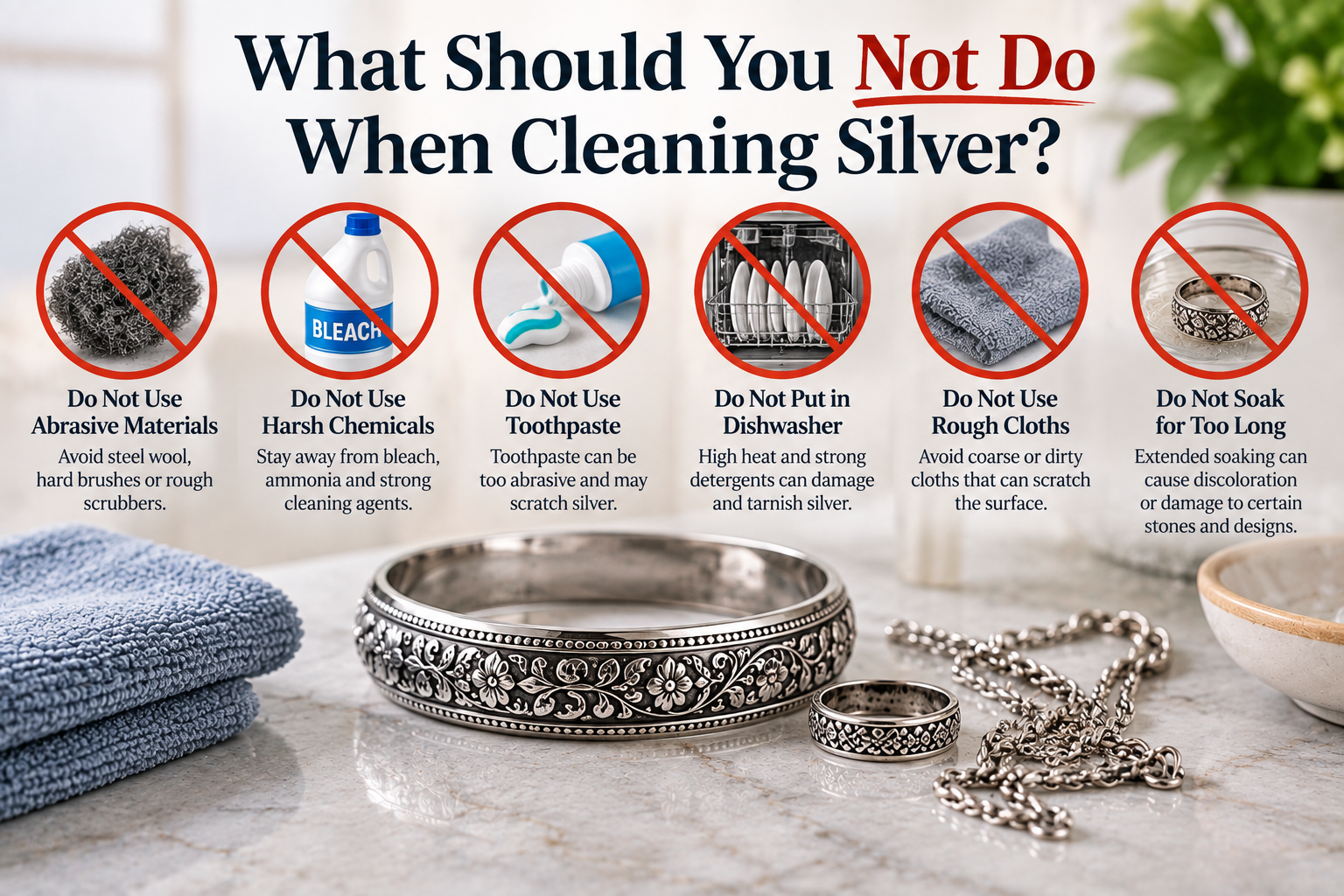
Do not use strong methods just because the jewelry looks very dark.
Don’t:
- Scrub silver really hard.
- Use coarse brushes.
- Use household chemical detergents.
- Work on the same spot again and again.
- Soaking jewelry without considering its construction.
- Use a strong chemical treatment on jewelry with delicate stones or finishes.
- Learn how to clean valuable antique jewelry without knowing its surface and construction.
The Canadian Conservation Institute states that frequent removal of tarnish may remove some underlying silver. Tarnish-removal methods can be especially damaging to silver-plated objects.
For those interested in bold and stylish jewelry designs, you can also explore Hip Hop Jewelry for different styles and options.
How to keep your silver jewelry shining for longer
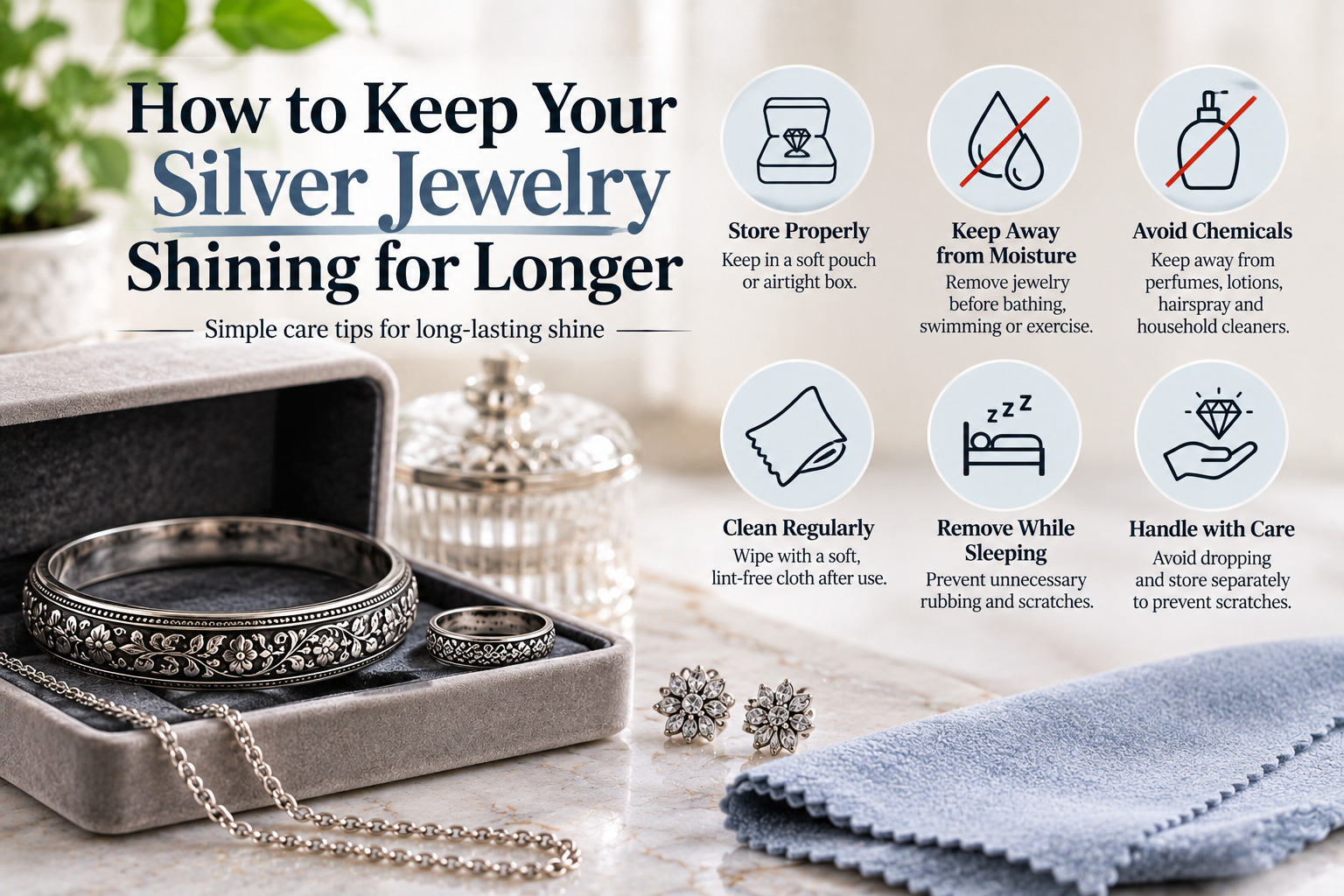
Cleaning is good, but preventing tarnish means you clean your jewelry less often.
Follow these easy habits:
- Keep the silver dry.
- Keep all jewelry in separate containers.
- Use an anti-tarnish bag or a suitable jewelry cloth.
- Remove jewelry before using chemicals or cleaning agents.
- Clean jewelry after use.
- Keep jewelry away from perfume and cosmetics.
- Do not put several pieces in one box.
GIA also recommends that sterling silver is stored in an anti-tarnish bag or cloth, and that jewelry is stored separately to limit scratches and damage.
How Often Should You Professionally Clean Silver Jewelry?
Many simple pieces can be cleaned at home, but if the jewelry is valuable, antique, heavily tarnished, damaged or made with delicate materials, it is better to get professional help.
When you should consider visiting a professional jeweler:
- A loose jewel.
- The clasp or chain is broken.
- The finish of the jewelry is strange.
- The item is an antique or a collectible.
- You are not sure if it is silver or silver plated.
- Home cleaning hasn’t solved the problem.”
How To Clean Silver Jewelry: A Quick Guide
| Problem | What You Can Do |
| Dust & Fingerprints | Clean with soft cloth |
| Light dirt | Use mild soap and warm water |
| Light tarnish | Silver polishing cloth suitable for use |
| Heavy tarnish | Professional cleaning recommended |
| Jewelry of Value | Obtain professional advice |
| Gemstone jewelry | Examine the stone before cleaning |
| Silver-plated article | Handle with care. |
The Bottom line
Cleaning silver jewelry at home need not be a difficult task. Begin with the least violent. Normal silver jewelry can be cleaned with mild soap, lukewarm water and a soft cloth to remove everyday dirt. For tarnish, carefully use an appropriate silver-cleaning product and avoid excessive polishing.
Above all, know what kind of jewelry you own before you start cleaning it. Solid Silver, Sterling Silver, Silver Plated Jewelry and Gemstone Jewelry may require a different care.
By cleaning it gently on a regular basis and by keeping your silver jewelry away from harsh chemicals, you will ensure that it stays clean and attractive for longer. If the pieces are valuable or fragile, it is safer to seek professional advice.