Gyms and fitness centers have a lot of electrical machines in them; treadmills, cross trainers, music systems, air conditioning, power outlets, LED display boards, and lights all operate round the clock in a gym or fitness center. Since there is so much electrical operation taking place along with many people walking around, even a small mistake on the electrical front can result in very serious accidents.
Although one does not have to know about electricity when owning or running a gym, some basic safety practices in electricity can help save yourself and your staff from any accident or loss of property. In this blog, we will cover the various electrical safety practices that every gym should adopt.
Why Electrical Safety Matters in Gyms
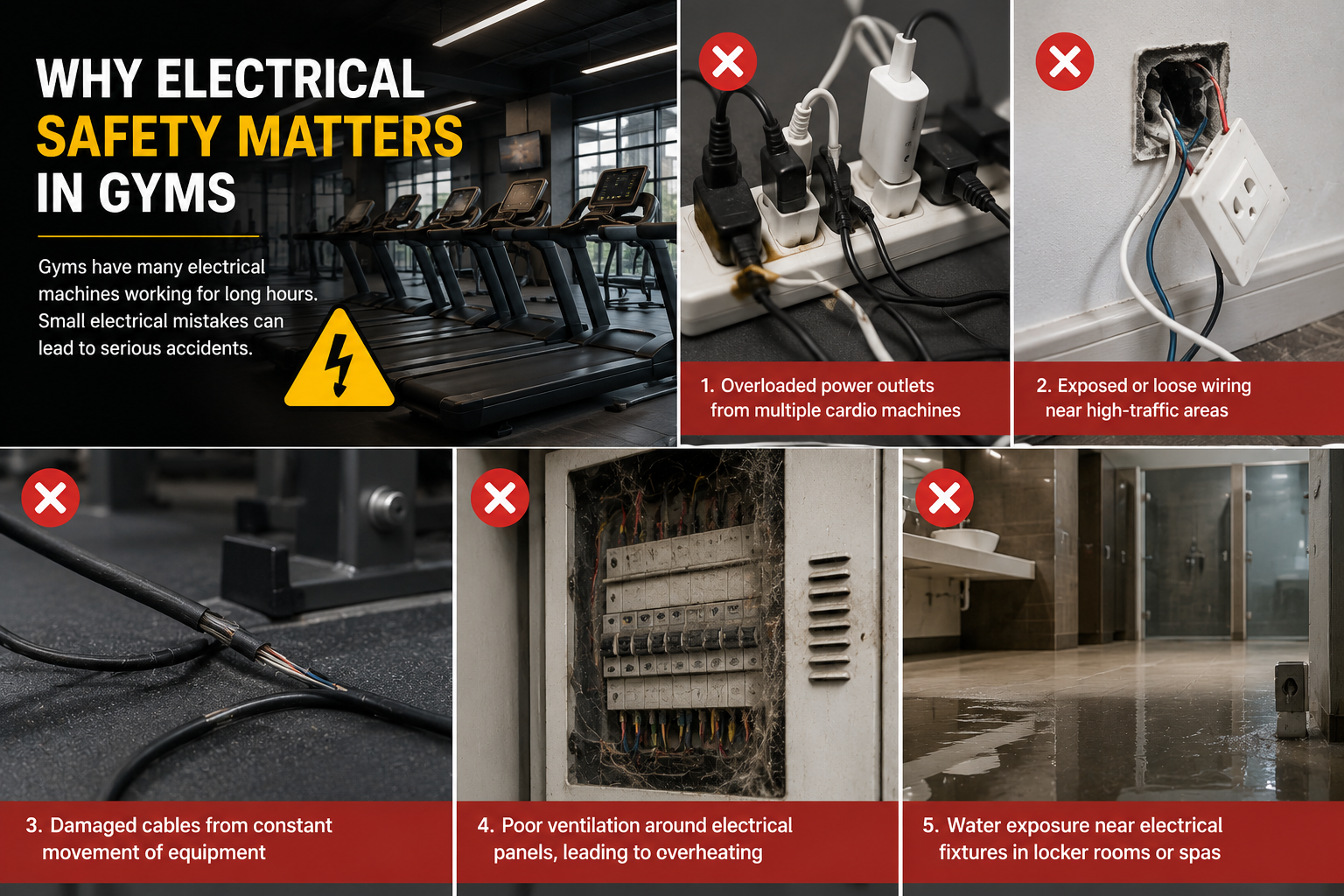
Gyms differ from other businesses. Gym equipment works constantly, usually 12-16 hours a day, and the users go around the cables, power outlets, and gym machines covered in sweat, increasing the possibility of accidents connected with electricity. All this is additionally complicated by water that may be present in case of saunas, showers, or drinking fountains.
Common electrical hazards in gyms include:
- Overloaded power outlets from multiple cardio machines
- Exposed or loose wiring near high-traffic areas
- Damaged cables from constant movement of equipment
- Poor ventilation around electrical panels, leading to overheating
- Water exposure near electrical fixtures in locker rooms or spas
Addressing these risks starts with a proactive electrical safety approach.
1. Get a Professional Electrical Audit
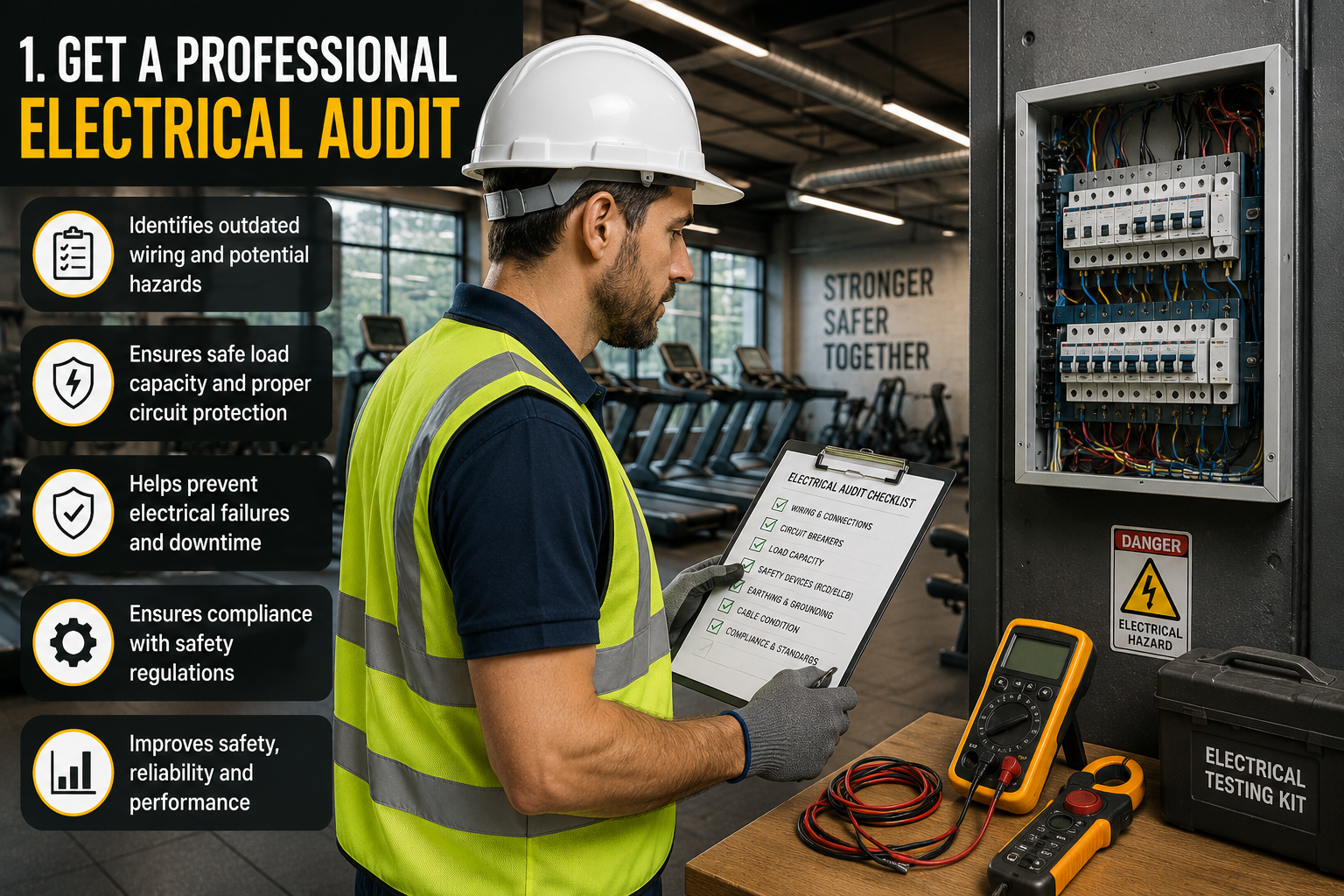
First and foremost, make sure to get a licensed electrician to check the wiring, circuit breaker capabilities, and loads within the facility. It will help determine any outdated wiring, low circuit capabilities, or improper installations that may cause trouble in the future.
2. Avoid Overloading Circuits and Outlets
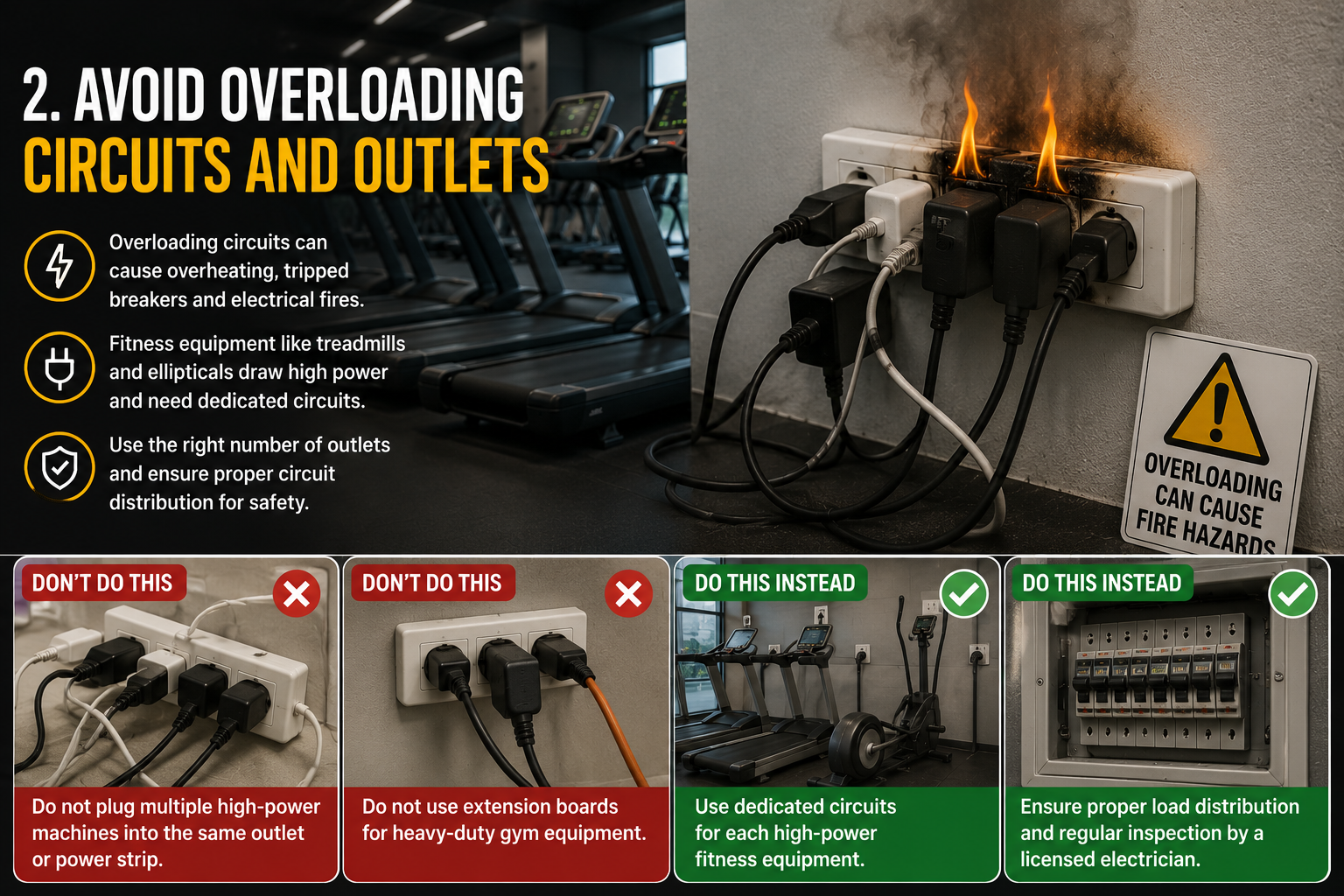
Fitness equipment such as the treadmill and elliptical need to be wired in their own separate circuits because of the amount of power that they use. It is not recommended to connect all the different pieces of equipment to one single circuit using an extension board or power strip.
3. Keep Cables Organized and Off the Floor
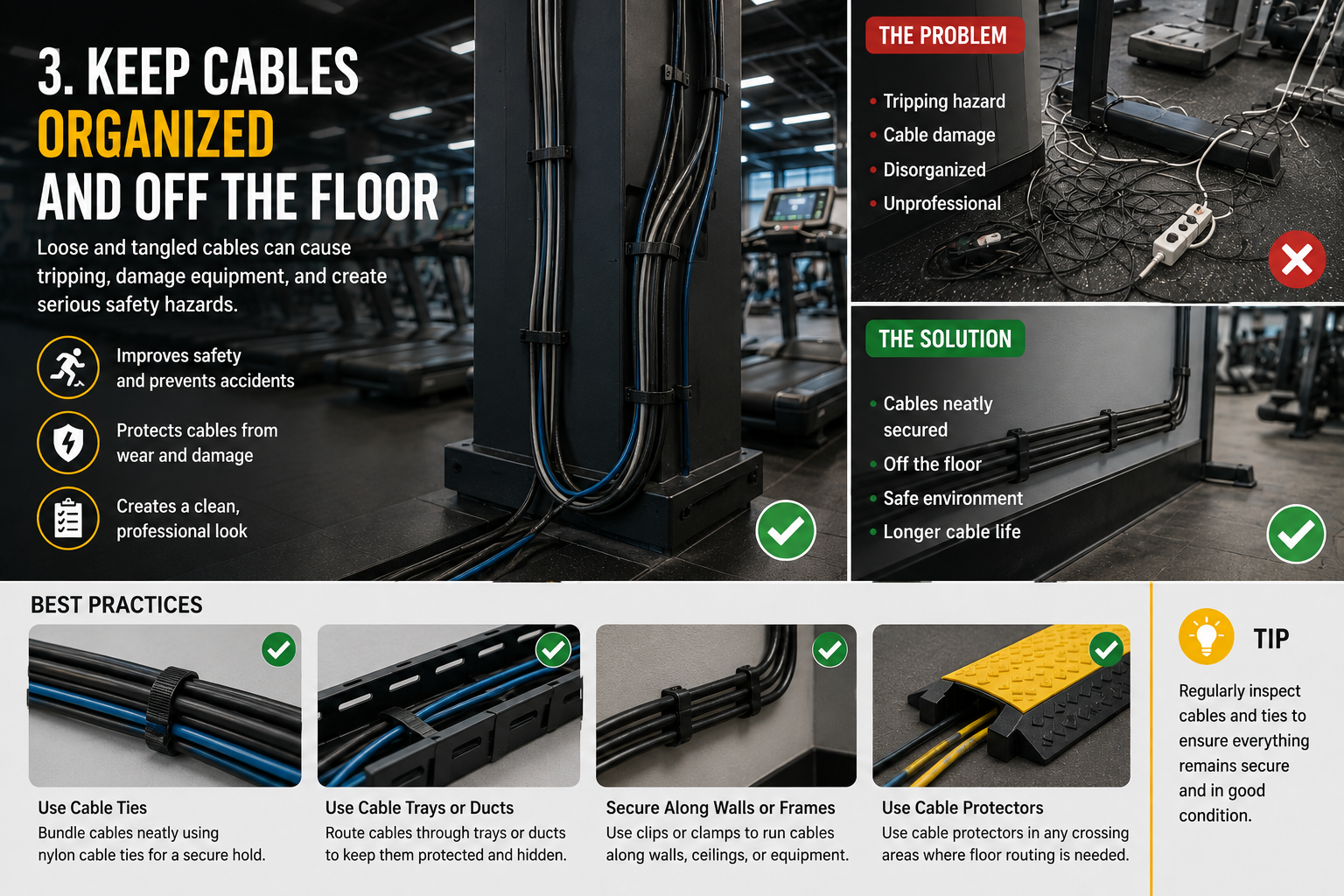
One of the most widespread – and most easily preventable – dangers in a gym environment is the presence of loose and tangled cabling. Electrical cables for sound systems, treadmills, power stations, and smart televisions frequently tend to be scattered across the floor or left untidily attached behind various pieces of equipment. These factors may result in tripping and wear and tear on cables leading to exposed electrical wiring.
In such a case, the need to properly manage your cabling is evident. Attaching your loose wires in bundles by using cable ties will ensure that you have a clean floor space in your gym environment, eliminating any risks of tripping and accidental damage to your cables. For highly-trafficked facilities such as a gym, it is preferable to use nylon cable ties, as they are robust, heat resistant and able to withstand vibrations of various pieces of fitness equipment.
Cable routing using nylon cable ties can not only improve your gym’s safety measures but will also create a more professional look in your facility.
4. Install Residual Current Devices (RCDs)
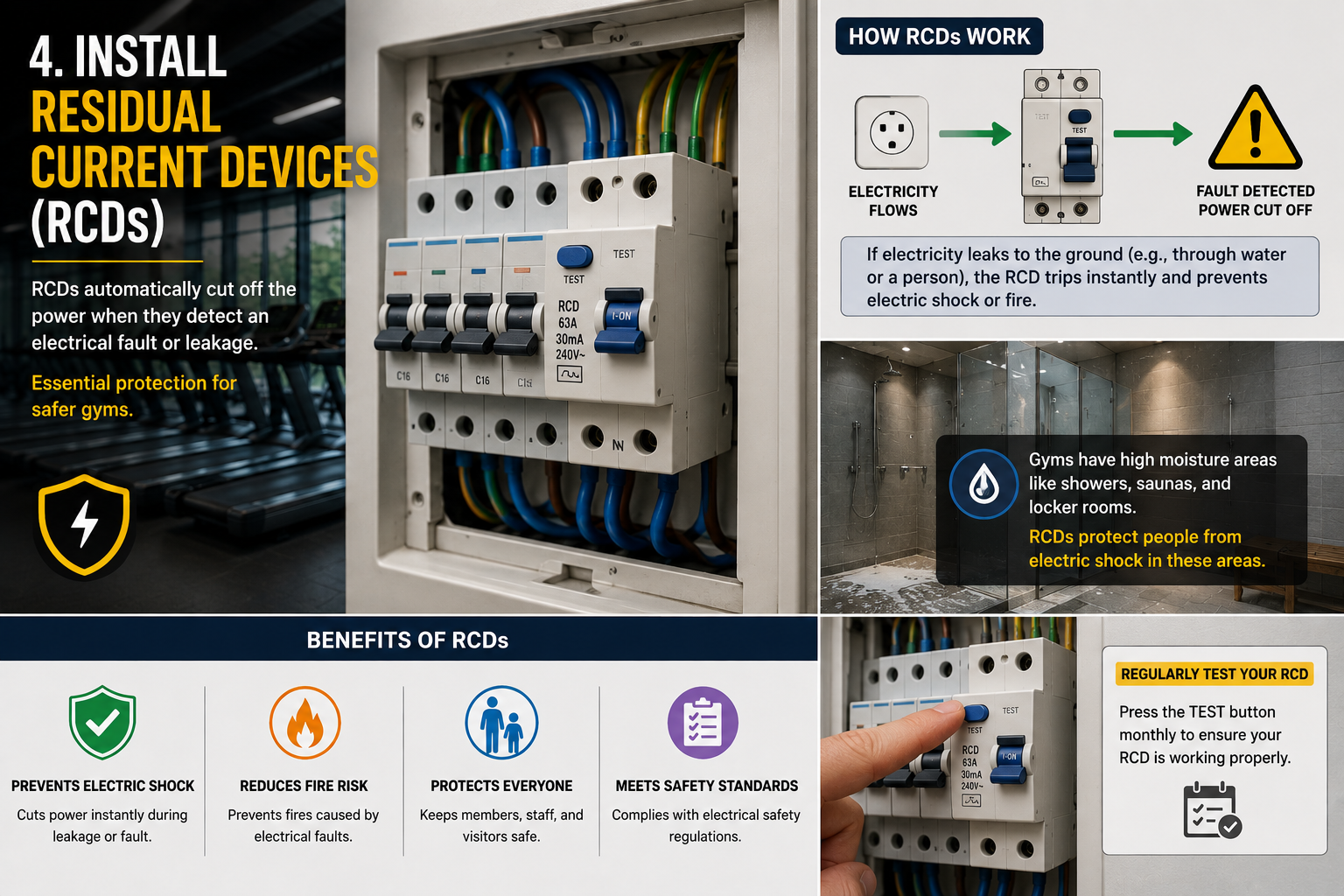
RCDs, otherwise known as earth leakage circuit breakers, automatically shut down whenever there is an imbalance in electricity. This is normally a clear indication of something being wrong or leaking. In places like the gymnasium, which has plenty of moisture due to sweating, the presence of RCDs is very essential.
5. Keep Electrical Panels Accessible and Well-Ventilated
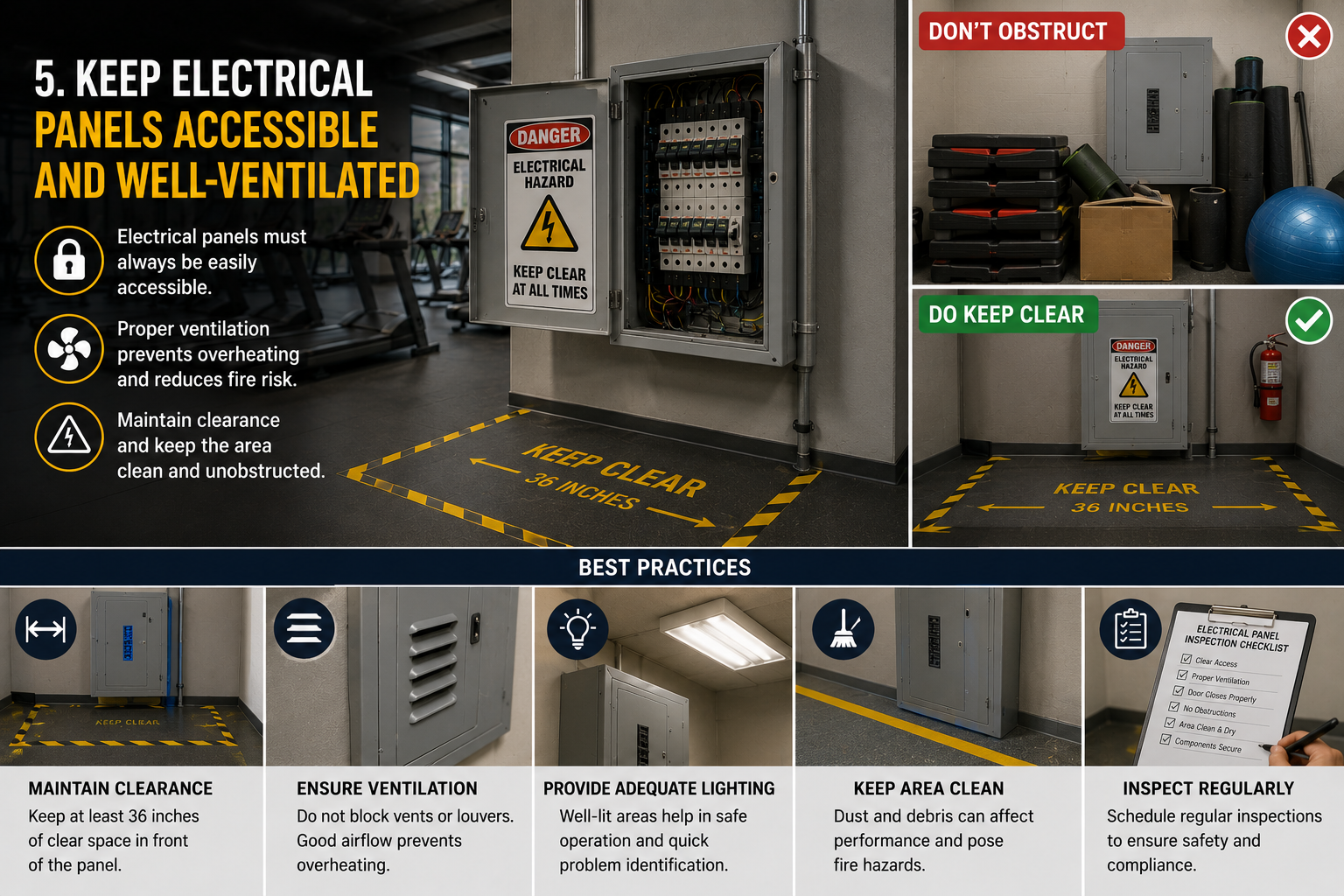
Electrical panels must not be obstructed by any equipment, storage cabinets, or furniture from the gym. Three feet of clearance should be available in front of the electrical panels for safety and to allow adequate heat ventilation since overheated electrical panels are one of the causes of electrical fires.
6. Schedule Regular Equipment Maintenance
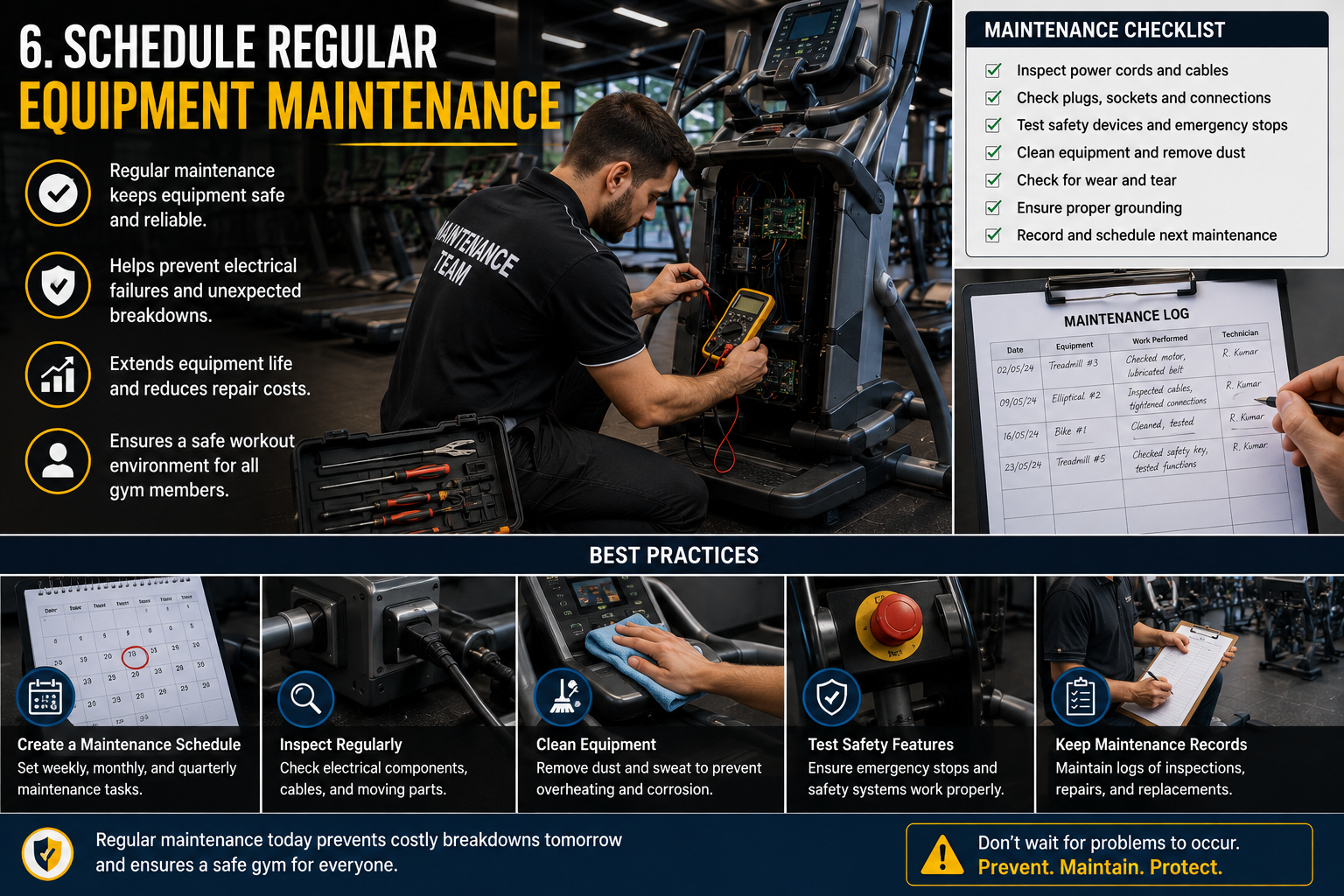
Electrical fitness machines should be included in your list of regular maintenance. This includes checking to see if the power cables are frayed, the plug is scorched, and all machines are grounded. Machines with faulty wires should not be taped together but replaced.
7. Train Staff on Basic Electrical Awareness
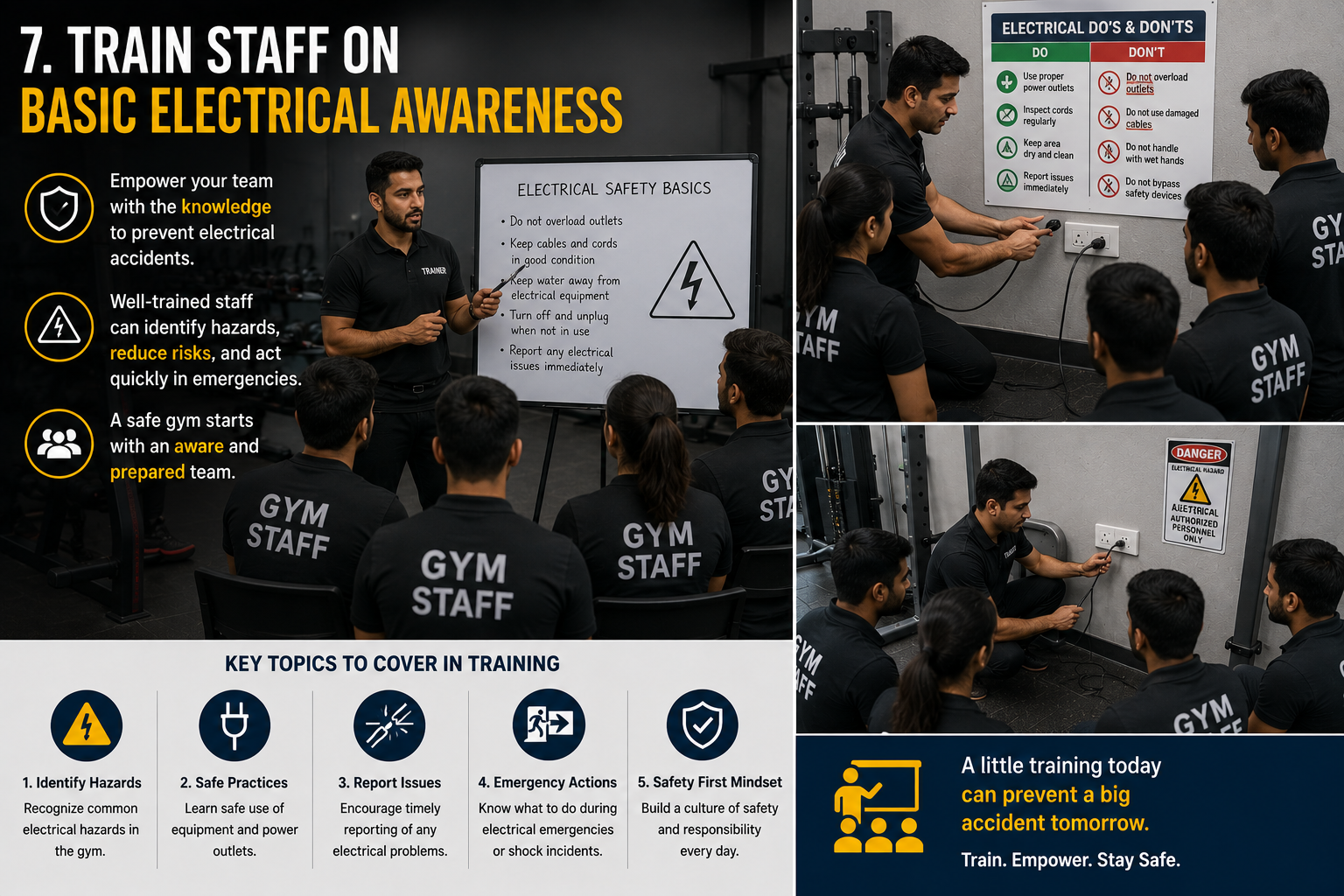
Your gym employees should be able to spot signs such as burning odor, flickering lights, or warm outlets. They should also know the right process for reporting and isolating an electrical problem. Identification in time will help to prevent small electrical problems from becoming major ones.
8. Manage Cables Near Water-Prone Areas
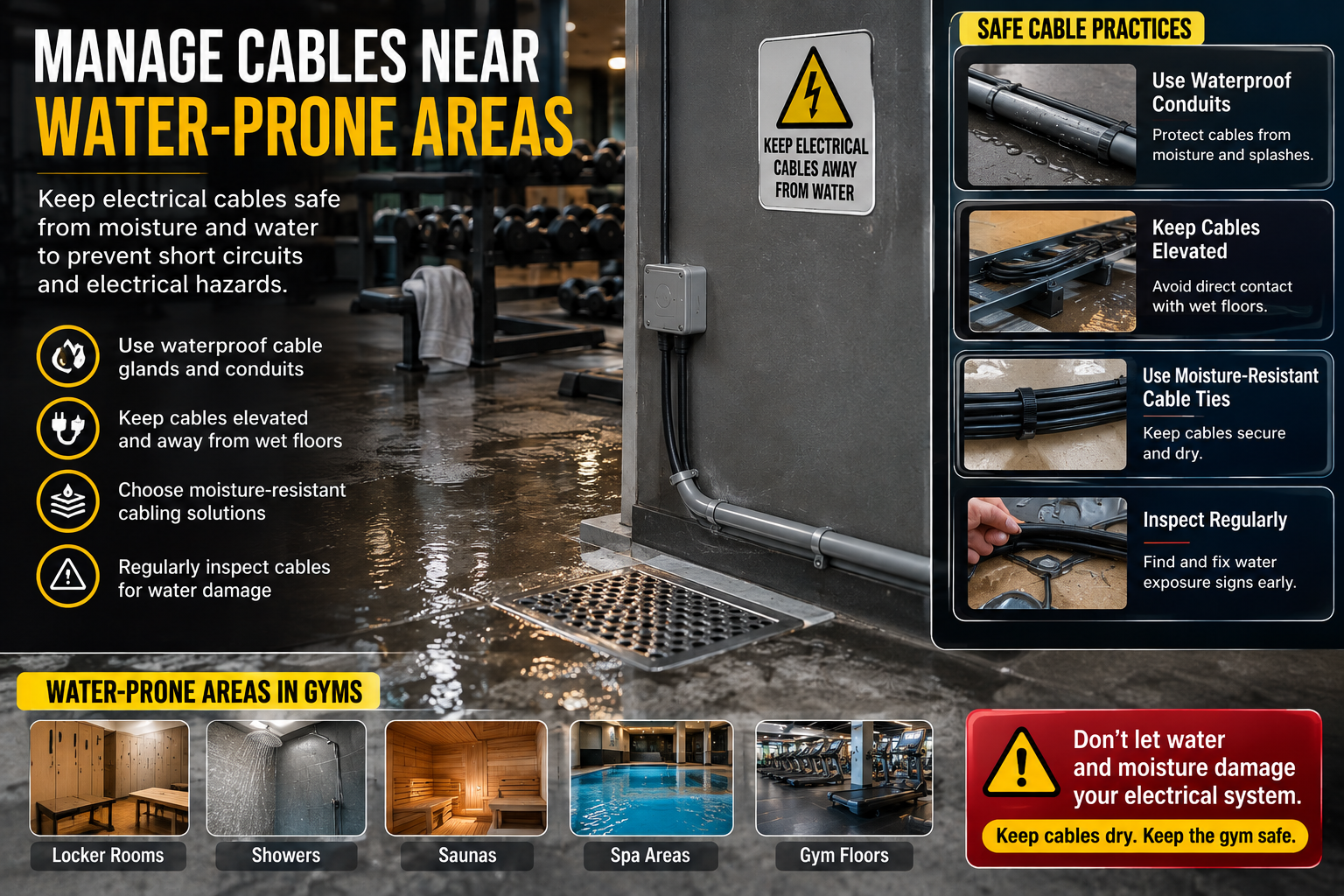
The locker room, shower area, and the spa must be paid additional attention. All the electrical fixtures that lie around this area must be sealed and suitable for wet surroundings. The cable ties used for the cables that are in the vicinity of these areas must be placed at some height above ground.
9. Label and Organize Wiring in Equipment Rooms
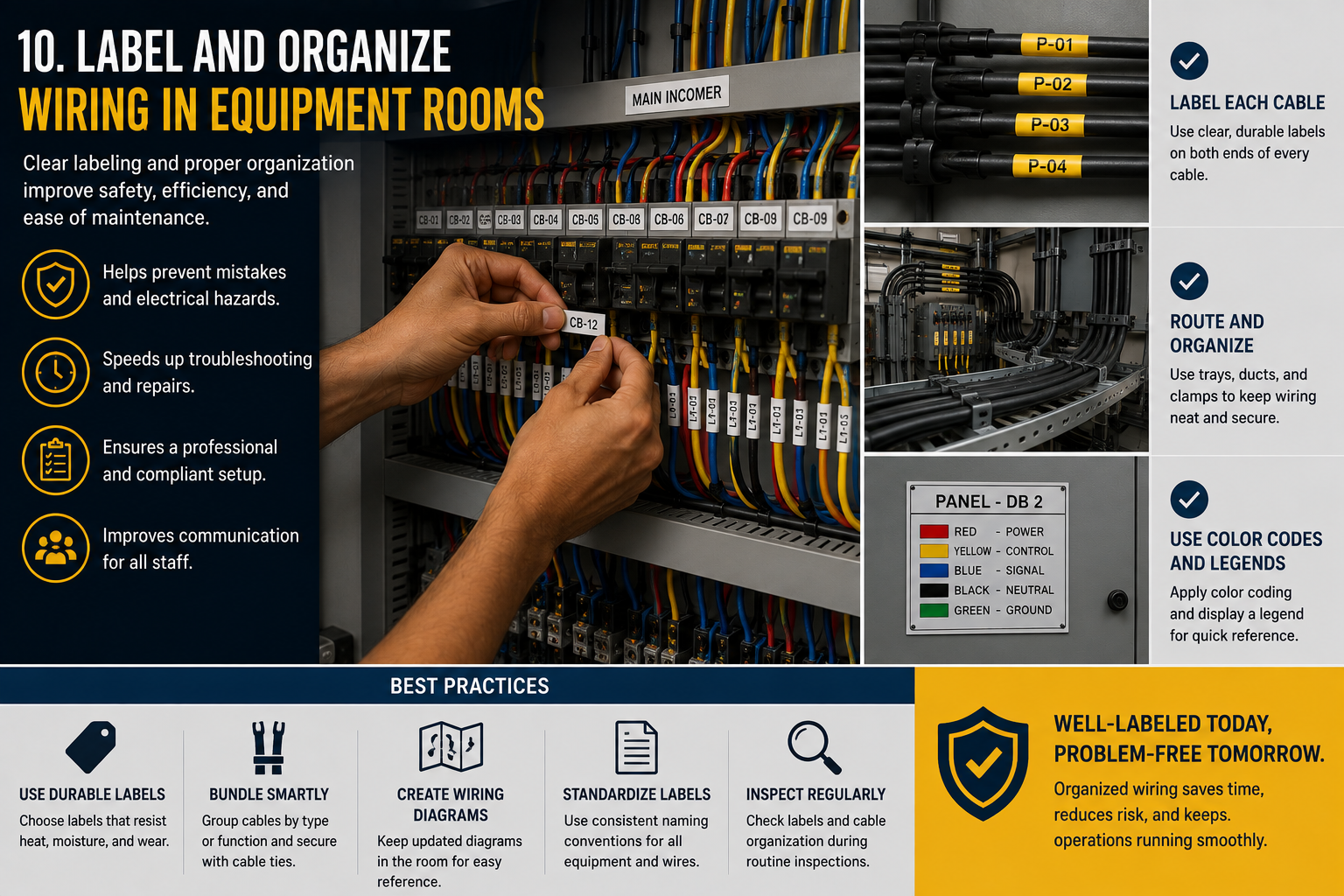
There are many different cables which run simultaneously in server rooms, audio system control rooms, and back ends of equipment. This can be made easier through the use of color-coded nylon cable ties, through which it is easier to identify and separate different kinds of cables.
10. Don’t DIY Electrical Repairs
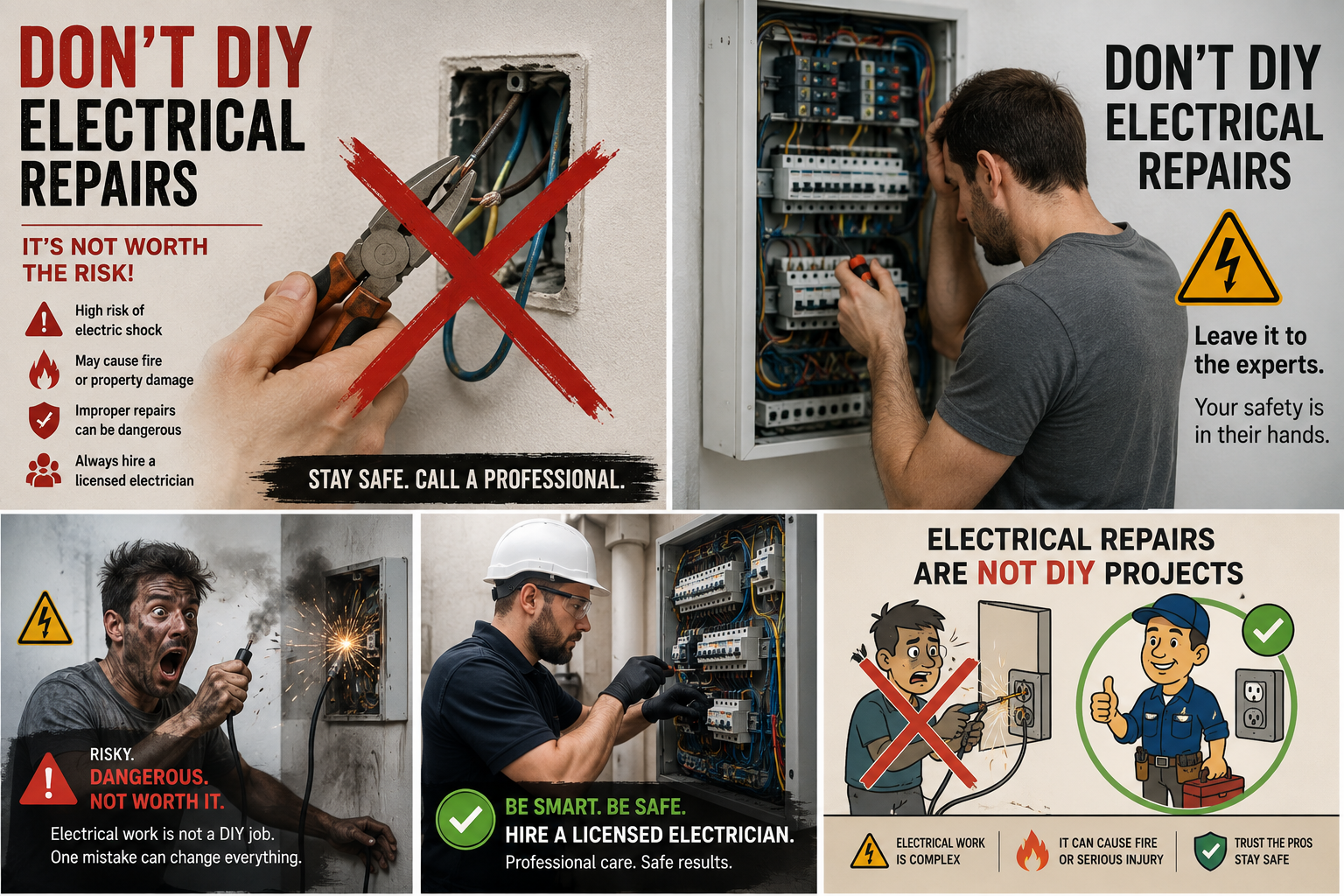
While it may be tempting to solve problems such as a flickering bulb or a loose socket on your own, electrical repair should only ever be done by a licensed electrician. Fixing electrical issues DIY-style in commercial premises is against regulations and poses liability issues in case of any accident.
For a gym, electrical safety is not just about staying away from dangerous situations; it’s also about creating healthy and safe practices for your gym community. Small things such as using proper cable ties for your wires, having frequent inspections, and making sure that everyone around knows how to spot potential problems will help you avoid accidents.
Simple purchases of some accessories, such as strong nylon cable ties for your equipment room, cardio area, and audio systems, will go a long way towards making your fitness center safer and more professional.
Frequently Asked Questions (FAQs)
Q1. How often does a gym require an electrical safety inspection?
Most gyms must undertake an inspection of their electrical systems by professionals at least once a year, but the frequency increases depending on whether the gym uses machinery that requires electricity for extended periods or if it has a very old electrical system.
Q2. Why are nylon cable ties preferred over regular cable ties for gyms?
Nylon cable ties have better resistance to heat and durability hence they are preferred because of the constant vibrations and movements around the cables in the gym due to the equipment used.
Q3. What is the greatest electrical risk in a fitness center?
Overloaded circuits and damaged or exposed cables are some of the common risks in fitness centers due to the connection of several high energy-consuming machines through one plug.
Q4. Can untidy cables lead to electrical hazards in a gym?
Untangled and untidy cables pose safety risks in terms of exposing people to the risk of tripping or damaging the cables, exposing the wiring to accidents.
Q5. Do I need to use cable trays or are cable ties alone sufficient to organize cables in my gym equipment?
Using cable ties is adequate in organizing small gym equipment; however, in case the gym equipment wiring is extensive, a combination of cable ties and trays is preferable.
Q6. If I notice a burning smell coming from an outlet or a piece of gym equipment, what should I do?
I must turn off the affected equipment, not touch any wiring, and inform the management to hire an electrician for inspection.
Q7. Do I have to install RCDs in my gym?
Yes, especially where there is water such as near the locker rooms.
Related Post: