Due to the change in the speed of life, we have all got used to stress and being unfocused quite a lot of the time. “10 Minute Yoga for Beginners to Reduce Stress and Improve Focus ” is a gentle and time-saving practice that can calm your mind; release your body tension and refresh your brain without feeling tired. It will take you through a few easy postures, deep breathing, and flowing movements to help you feel light, calm, and concentrated even if it is your first yoga session.
|
Medical Disclaimer: The content in this article is for general informational purposes only and is not a substitute for professional medical advice. Consult your doctor or healthcare provider before starting any new exercise or yoga routine, especially if you have pre-existing conditions or injuries. Perform yoga exercises at your own risk and stop immediately if you experience pain or discomfort. |
Why Morning Yoga Is Important for Stress Relief and Focus
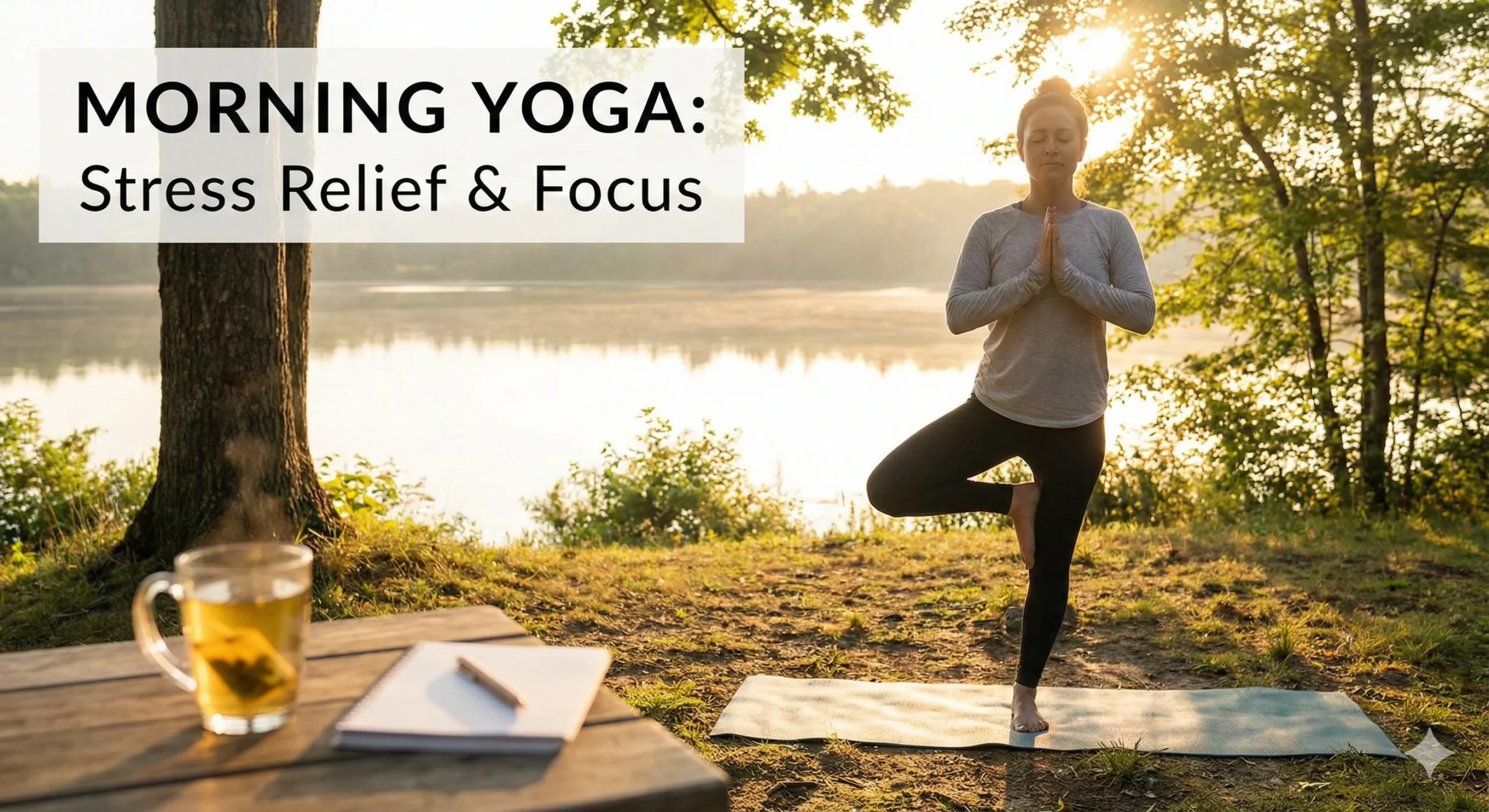
Stress relief and better focus are just two of the many advantages of morning yoga, which has been integrated into the hectic and stressful lifestyles of the modern era. Through yoga, people can calm their nerves, release the accumulated tension, and have a fresh start to the day. Even a short morning yoga session can improve the functions of the brain, balance the hormone levels, and prepare the body and mind for concentration, hence, it is an excellent habit for both beginners and busy professionals.
A desk job involves sitting for long hours, which can negatively affect your posture and overall health. Read about Desk Job Stretches: 5 Office Chair Exercises for All-Day Sitters
Benefits Of Morning Yoga
- Various beneficial aspects of tai chi contribute to the relaxation of the mind and help to decrease the levels of stress and anxiety on a daily basis.
- Improves brain functioning such as attention, concentration, and clarity of thoughts.
- Helps to improve the circulation of blood and the flexibility of joints, particularly in the morning after one’s awakening.
- Is capable of keeping a person calm, and in a good mood all day long.
Benefits of a 10-Minute Yoga Routine for Beginners
Doing a quick 10-minute yoga routine is a great low entry for newbies who want to establish a healthy and sustainable fitness habit through yoga. Yoga practice session of a miniature length is straightforward to the point, helps to de-stress and promote concentration without exerting one’s physicality.
Just 10 minutes daily yoga practice will help absolute beginners in opening up, taking a proper breath and getting to know the mind-body connection more clearly. These are the very things which entice one to continue with the practice.
- Great choice for beginners who are short on time.
- Based on research, it helps to lower stress levels and thus calm the mind.
- This practice can enhance flexibility and thus increase the range of motion of the joints.
- Concentration, balance, and mental clarity are among the benefits of the practice.
- Yoga helps to maintain correct posture and breathing habits.
- Achieve a daily yoga practice by your own will and determination.
To stay energetic throughout the day, a short morning workout is essential for boosting energy and improving focus. Read more in Detail on: 7-Minute Morning Workouts for Busy Professionals: Beginner-Friendly HIIT(High-Intensity Interval Training) Routine
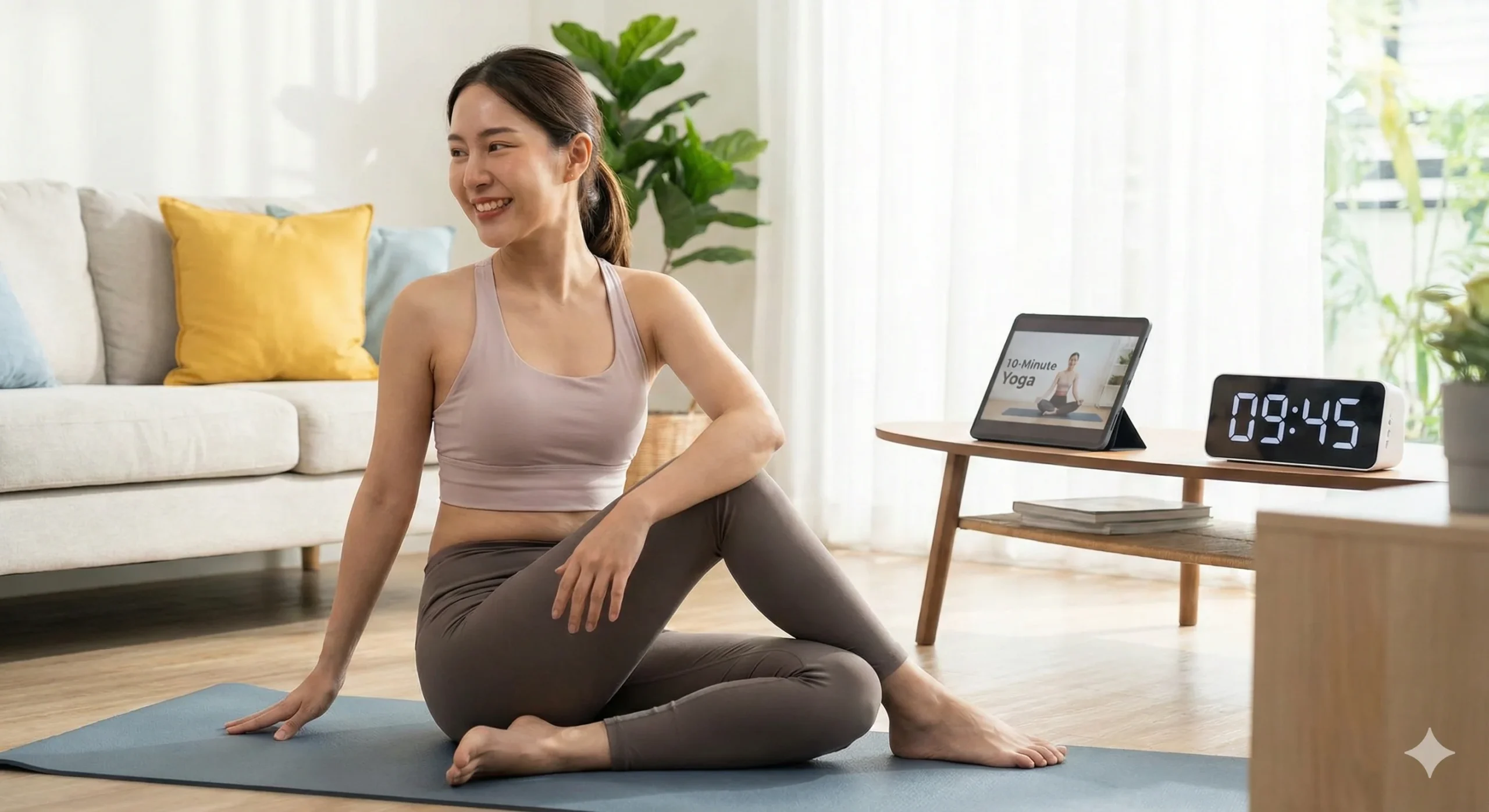
10-Minute Beginner-Friendly Yoga Flow (Step-by-Step)
| Step | Yoga Pose / Activity | Duration | Key Benefits |
| 1 | Gentle Warm-Up & Deep Breathing | 2 minutes | Prepares body, relaxes mind, improves breathing |
| 2 | Cat–Cow Pose (Marjaryasana–Bitilasana) | 2 minutes | Loosens spine, reduces stiffness, relieves tension |
| 3 | Downward Facing Dog (Adho Mukha Svanasana) | 2 minutes | Stretches back & legs, boosts circulation |
| 4 | Standing Forward Bend (Uttanasana) | 1.5 minutes | Calms nervous system, releases stress |
| 5 | Child’s Pose (Balasana) | 1.5 minutes | Relaxes lower back, promotes mental calm |
| 6 | Seated Relaxation & Deep Breathing | 1 minute | Improves focus, reduces anxiety |
Benefits of Yoga Flow
- It is beneficial for you by lowering stress and calming your mind.
- One enjoys greater focus, concentration, and mental clarity.
- If you are just starting out, it softly supports your body in becoming more flexible and mobile.
- Energetic and refreshed, this practice will free you from the remnants of sleep stiffness and muscle tension.
- Moreover, through the practice, one also raises the awareness of one’s breathing and body.
- The benefits of yoga include the fact that it improves the circulation of blood to the muscles and gives an energy boost to the body.
- Your alignment and back health are enhanced due to this practice.
Warm-Up Poses to Prepare Your Body for Yoga
Before you start your yoga session, warming up is a must as it helps to gently wake up your muscles, makes them more flexible, and lessens the chances of tightening or hurting them.
Warm-up pose series for yoga preparation body is a slow, intro-level movements drip campaign that gets the blood flowing, unpacks the stiff joints, and relaxes the nervous system.
Such poses facilitate the body’s smooth transition into the main yoga session, making it possible to get a more significant value from each stretch while deepening relaxation and overall concentration.
- Neck Rolls – This exercise helps in releasing tension from the neck and shoulder area.
- Shoulder Rolls – This helps in reducing the stiffness in the upper body.
- Seated Side Bends – A simple gentle stretch for the spine and obliques.
- Cat–Cow Pose – Increases the spine’s flexibility and movement.
- Seated Forward Fold – A good warm-up for the lower back and hamstrings.
- Deep Breathing (Pranayama) – It gets the mind back to normal and also oxygen flow is enhanced.
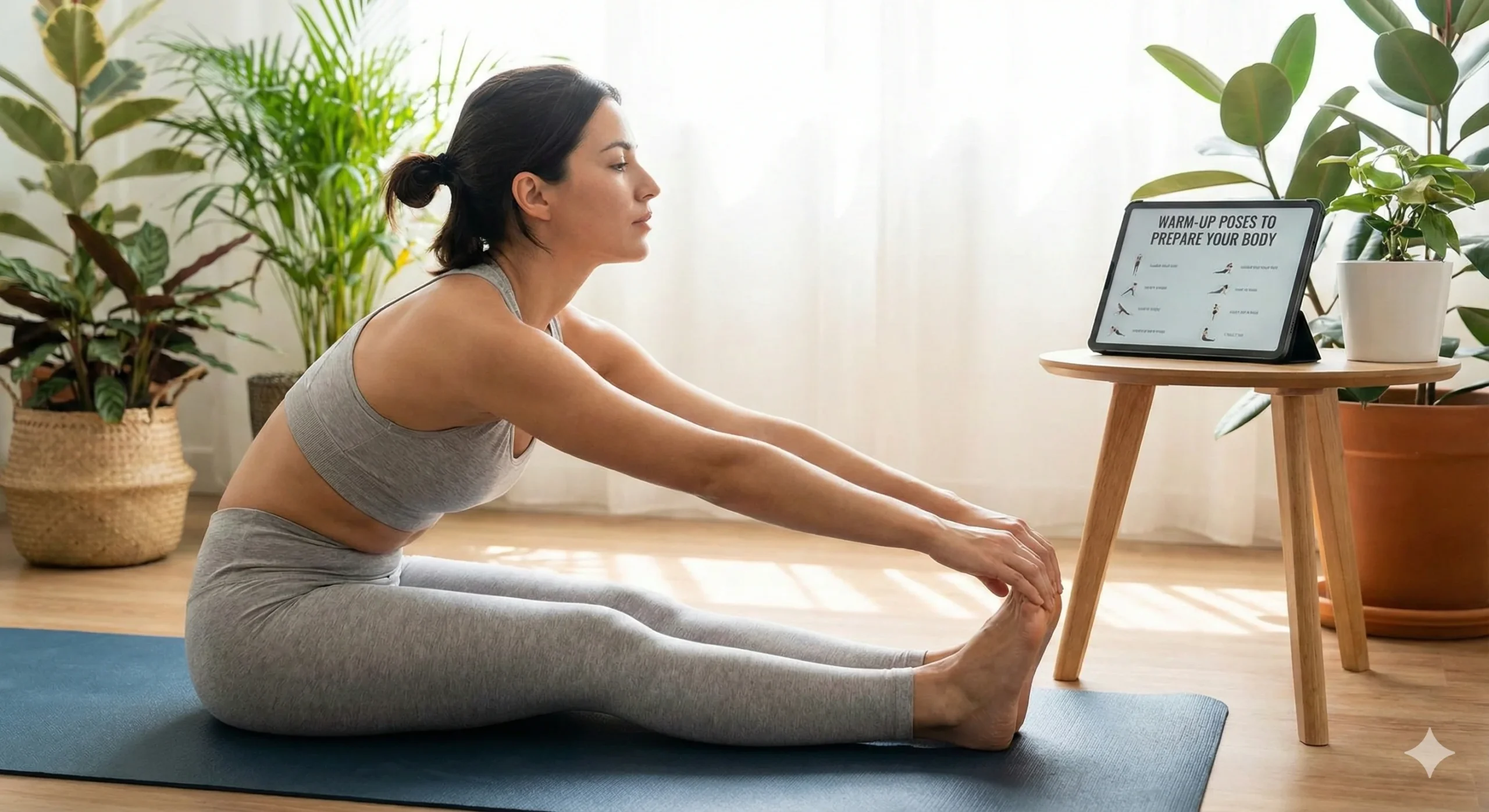
| Yoga Pose / Activity | Time Duration | Rest | Key Focus / Benefits |
| Deep Breathing (Pranayama) | 1 minute | No rest | Calms mind, improves oxygen flow |
| Neck Rolls | 30 seconds | 10 sec | Releases neck and shoulder tension |
| Shoulder Rolls | 30 seconds | 10 sec | Loosens upper back and shoulders |
| Seated Side Bends | 1 minute | 10 sec | Stretches spine and side muscles |
| Cat–Cow Pose | 1.5 minutes | 15 sec | Improves spinal flexibility |
| Seated Forward Fold | 1 minute | 15 sec | Warms up lower back and hamstrings |
Beginner Yoga Poses to Reduce Stress and Calm the Mind
Yoga poses for beginners focusing on relaxation could significantly reduce stress, calm your nervous system, and bring about mental peace. These gentle postures are so easy that you can do them without much effort, they don’t require any prior experience, and they are excellent for releasing the tension stored in your body. Regularly practicing yoga poses for relaxation might help one become emotionally stable, improve one’s ability to concentrate, and feel relaxed all day long.
| Yoga Pose | Time Duration | Rest | Key Benefits |
| Child’s Pose (Balasana) | 2 minutes | 15 sec | Relieves stress, relaxes mind |
| Seated Forward Fold (Paschimottanasana) | 1.5 minutes | 15 sec | Calms nervous system |
| Cat–Cow Pose | 1.5 minutes | 15 sec | Releases spinal tension |
| Legs Up the Wall (Viparita Karani) | 2 minutes | 20 sec | Reduces anxiety, improves circulation |
| Easy Pose with Deep Breathing (Sukhasana) | 2 minutes | No rest | Enhances relaxation and focus |
Yoga Poses to Improve Focus and Mental Clarity
Yoga poses involve focus, controlled breath, and mindfulness of the body that can effectively help concentration and mental clarity. These postures calm an agitated mind, increase blood flow to the brain, and raise the capacity to attend. Concentration yoga, if regularly practiced, works like giving an extra energy boost to your focus, dimming brain fatigue, and keeping an alert, calm, and refreshed mind throughout the day.
Yoga Poses Table
| Yoga Pose | Time Duration | Rest | Key Focus / Benefits |
| Mountain Pose (Tadasana) | 1 minute | No rest | Improves posture and mental focus |
| Tree Pose (Vrikshasana) | 1.5 minutes | 15 sec | Enhances balance and concentration |
| Seated Forward Fold | 1.5 minutes | 15 sec | Calms mind, improves focus |
| Eagle Pose (Garudasana – Arms Only) | 1 minute | 15 sec | Sharpens attention, releases tension |
| Easy Pose with Deep Breathing | 2 minutes | No rest | Improves mental clarity and calmness |
Breathing Techniques to Enhance Relaxation and Concentration
Breathing exercises are very helpful in getting people to relax and be able to concentrate better. Controlled breathing helps calm down the nervous system, thereby lowers the stress level, and at the same time, it makes the brain more focused. A newbie can experiment with a couple of really simple pranayama exercises as opposed to the complicated ones for only a few minutes anywhere and thus, he/she will experience a different kind of focus, mental clarity, and emotional balance.
| Breathing Technique | Time Duration | Rest | Key Benefits |
| Deep Belly Breathing | 2 minutes | No rest | Relaxes mind, reduces stress |
| Box Breathing (4-4-4-4) | 2 minutes | 30 sec | Improves focus and control |
| Alternate Nostril Breathing (Nadi Shodhana) | 2 minutes | 30 sec | Balances mind and emotions |
| Slow Exhale Breathing | 1.5 minutes | No rest | Calms nervous system |
| Seated Mindful Breathing | 2 minutes | No rest | Enhances concentration and awareness |
Cool-Down Poses to Relax the Body After Yoga
When we finish doing yoga, it is obligatory to engage in cool-down poses to make the body go from an athletic condition to a state of calm. These postures, normally mild exercises, are among the best activities to release tension and bring serenity. One of the top cool-down positions is the one popularly called “Child’s Pose” as it allows for breathing through the back and shoulder muscles while releasing and stretching them. Another great posture is “Supine Twist” that provides relief to the spine and increases blood flow. Everyday life takes a toll on our bodies and minds. etc., yoga among other things and serene living.
| Yoga Pose | Time Duration | Rest | Key Benefits |
| Child’s Pose (Balasana) | 2 minutes | 15 sec | Relaxes back, calms mind |
| Seated Forward Fold | 1.5 minutes | 15 sec | Releases tension, improves flexibility |
| Supine Spinal Twist | 1.5 minutes (each side) | 20 sec | Relieves spinal stiffness |
| Reclining Bound Angle Pose | 2 minutes | No rest | Deep relaxation, stress relief |
| Corpse Pose (Savasana) | 2–3 minutes | No rest | Complete body and mental relaxation |
How Often Should Beginners Practice Yoga for Best Results?
Yoga, for being the much health benefits, is getting really popular and, really, many of the newbies are eager to grasp the how often they should practice the activity to derive maximum benefits. It is necessary for those who are not yet familiar with ancient practice to incorporate yoga into their everyday life in order to see the best results. For the most part beginners are going to want to practice yoga a couple of times a week. They will be able to gain strength, become more flexible, and learn mindfulness and their bodies through the process, which is really the path they taste with every segment without causing overload. Eventually, they can choose to engage in more sessions as they take this step and thus, they focus more on the practice to get better and recognize the spiritual-physical yoga experience.
It’s a routine for total beginners and also for those who don’t have much time.
Recommended Frequency for Beginners
- Doing it 3-5 times a week can greatly increase your flexibility, concentration and help you fight stress.
- If time is your constraint, then a short daily session of about 10 to 15 minutes is great, having a few quick sessions here and there will eventually bring you the benefits.
- If you feel sore, tired or stressed, give your body a day off.
- Don’t focus on the length or intensity of your session but rather on how often you practice.
- Complement it with breathwork & meditation: What it results in is a metaphorical clarity and an deep rest.
Tips to Stay Consistent With Daily Morning Yoga
Keeping up with daily morning yoga you may have felt like a struggle, especially when you have busy schedules and can’t get motivated. Tips to Stay Consistent With Daily Morning Yoga aim at developing small, manageable habits that make yoga fun and not too hard to be done. When you set yourself attainable goals, making your morning peaceful, and following your body’s signals, you will make yoga a very familiar thing to your day—thus, when the morning comes, you’ll be full of energy, focused, and balanced.
Tips to Stay Consistent
- Make a habit out of doing yoga on certain days at a particular time, whether you are fully dedicated or not.
- Prepare a space in your apartment that will make you feel comfortable and focused and where you can practice without any distractions.
- Make your goals to be contented with, and that are well within your current level of fitness, and that feasibly work in your diet and lifestyle.
- Concede with short practices at first and then intensify the period gradually after you become used to it. You find that a day that stands out for you is because you will attempt the next one in a particular way or you remember it very well.
- Keep switching to a different style if you get bored with your usual one, and raise your level of yoga to get stimulated and move your body around.
- Meet the group in your place or online, where the take the same yoga classes with you to take the responsibility for the success and to encourage each other.
- Create a yoga diary to keep track of your progress, meditation sessions, and remind yourself of your accomplishments when you lose motivation.
- Include yoga in your routine by practicing mindfulness breathing or doing meditation, which you can even use to rest days.
- Make use of books, videos, or apps to improve your skills and make your yoga more fun and life-empowering.
- The very first and the most important thing is that you must not try to reach limits that your body stipulates. If necessary, adjust the poses to keep your practice consistent and pleasant for your body.
10-minute morning yoga for beginners
This is a morning yoga session that lasts for 10 minutes and it is great for beginners. It helps you to energize your day and brings about a relaxed state of mind.
Morning yoga to reduce stress
You can try to relax with some morning yoga and clear your mind before going to work with a refreshed and focused one.
Yoga for focus and mental clarity
Yoga concentration and mental clarity focus training is just one of the ways through which your mind can become sharper and you can be able to concentrate better throughout the day.
Beginner yoga routine at home
Regular exercise is necessary to a healthy lifestyle. Give this beginner yoga sequence a try at home to make fitness a regular and healthy practice.
Quick yoga flow for busy professionals
This simple yoga routine for busy professionals allows you to relax and refresh your energy in just 10 minutes.
Short yoga exercises to calm the mind
Yoga movements and poses that don’t take long and are simple enough to be done at home or office definitely are great and helpful in managing inner anxiety, calming the nervous system and bringing the mind to peace at all times.
Some Important Benefits of Yoga
- Yoga movements and poses which are brief and simple to perform at home or even in the office are highly efficient for taming inner anxiety, soothing the nervous system, and keeping the mind calm at all times.
- Daily stress relief yoga poses will assist you in releasing tension and having a peaceful mind.
- If done regularly, yoga can really help to increase one’s mental focus, it helps you to stay focused and your mind will be sharp throughout the day.
- Gentle yoga for beginners is an excellent and safe method to start a productive at-home yoga practice.
- Deep breathing for relaxation can be included as one of the methods to reduce stress and calm your body and mind.
- Yoga stretches for flexibility are not only the best ways to increase your flexibility, but they also help you to fix your posture and strengthen your whole body.
- Daily yoga practice makes such a big difference in one’s level of fitness, mind clarity, and overall well-being that it is worth doing on a regular basis.
FAQs
1. How long should a beginner do morning yoga?
It is advisable for a start to do morning yoga for about 20 to 30 minutes so as to optimally wake up their day.
2. Can 10 minutes of yoga really reduce stress?
Indeed! Just let it slip through 10 minutes of your precious time time to do yoga it can reduce to a great extent is stress of your body which is a result of mind calmness and deep breathing techniques or relevant ones by gentle movements.
3. Do I need any equipment for this yoga routine?
Actually, the simplest yoga routine doesn’t need any equipment, only a non-slip mat and comfortable clothing are required for a perfect session. But, you can also use optional props like blocks and straps to help you with your flexibility and hold your posture more accurately.
4. What is the best time to practice morning yoga?
You can practice morning yoga between 5:30 AM and 6:30 AM. This is the time of the day when the mind is at its best and the setting is mostly peaceful. Getting the day started practicing yoga at sunrise allows the practitioner to amalgamate with the stillness of the early morning and so they set the right attitude for the day.
5. Can beginners practice all these poses safely?
Yes, practicing these yoga poses carefully is exactly what novices can do if they are in tune with their bodies and do not go over the limits set. Commencing the regimen under the supervision of a yoga instructor is imperative as it ensures correct posture and form, which in turn minimizes the chances of injury.
6. How often should I practice to see results?
From each of Yoga practices, you will feel the difference in a few weeks. It is usually recommended to go through yoga practice three to four times a week where practicality and consistency play a significant role in the safeguard of your health. Be in peace with the universe, and a consistent practice of yoga will lead to a more balanced and happy life, even if it’s only 20 to 30 minutes each time.
7. Can I combine yoga with other morning workouts?
Yoga is not only for a peaceful morning but also reduces the risk of injury and aids in recovery more swiftly by increasing flexibility and mindfulness. It is, however, important to make the plan specifically for you and to rest the needed time between the exercise durations so that you do not get too tired.
|
|