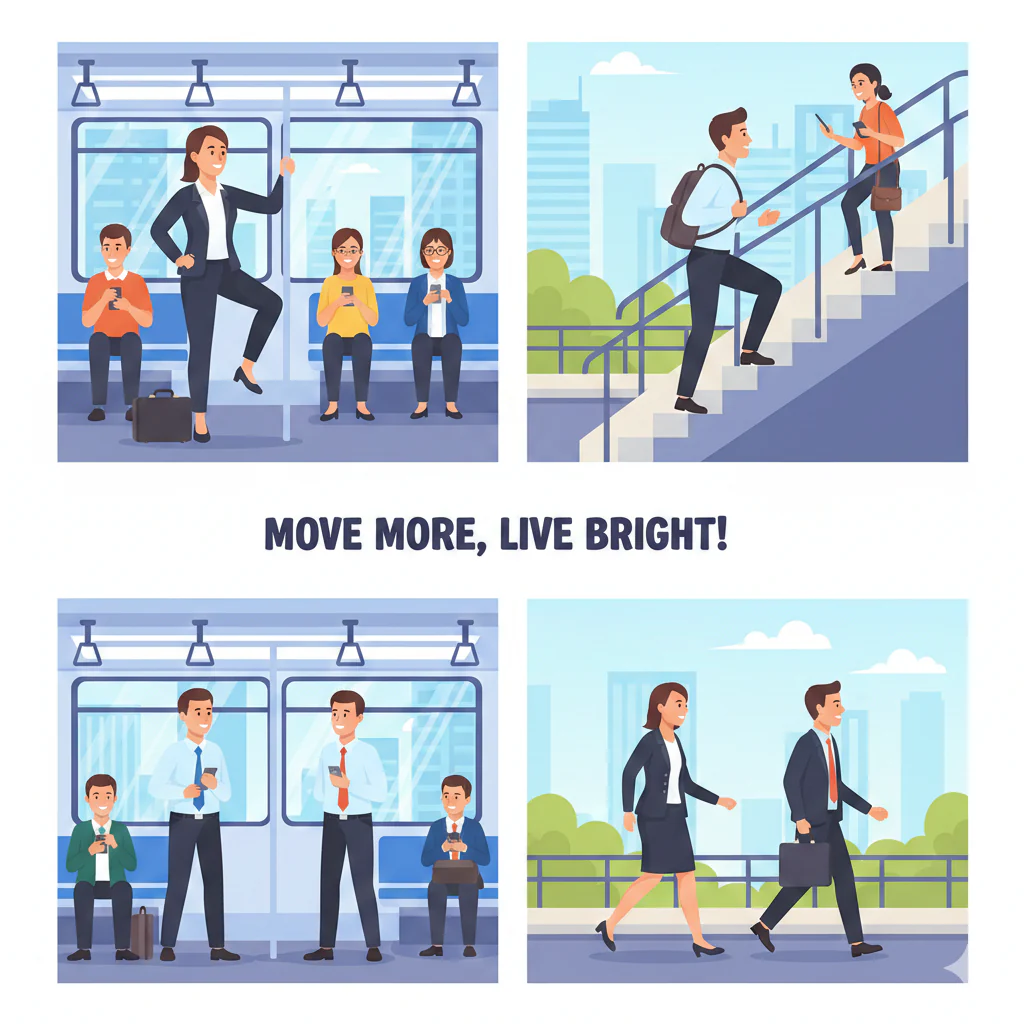
Keeping fit is a challenge nowadays, especially with a long commute that takes up almost all your energy. Nevertheless, including an easy exercise routine in your daily commutes can be a very effective way of enhancing your health and gaining more energy without even needing to remove a single meeting from your list of things to do for the day. While doing some simple exercises on your way to work, through which one could be on a train, bus, or a carpool, one can integrate physical activity in his life in a very natural way and feel now the benefits of doing so, staying active. Tap your fingers to the rhythm of your favorite song, stretch your legs, or take a phone walk around the office if you’re out of ideas for physical activity. See how you can bring about a significant change in your mind, body, and overall well-being by simply engaging in your exacerbated daily routine.
|
Medical Disclaimer: This content is for informational purposes only and is not a substitute for professional medical advice. Please consult a healthcare professional before starting any exercise routine.
|
Why Staying Active During Your Daily Commute Matters
Keeping up physical activity while commuting is crucial for people who are mainly sedentary at work to maintain mobility and health in general. When one moves very little while traveling, it can cause one to get muscle stiffness, get in a bad posture and one’s energy level may drop. If you incorporate basic exercises and gentle movements during your commute, you will enhance your blood flow, lower your pain, and get your body ready for a more productive and energetic day.
Key Points:
- Helps to lessen the feeling of stiffness in the neck, shoulders, and lower back.
- Facilitates the blood flow during long hours of travelling.
- Contributes to better posture and movement.
- Maintains one’s energy on a stable level during the whole workday.
- Enables one to stay physically active even with a hectic schedule.
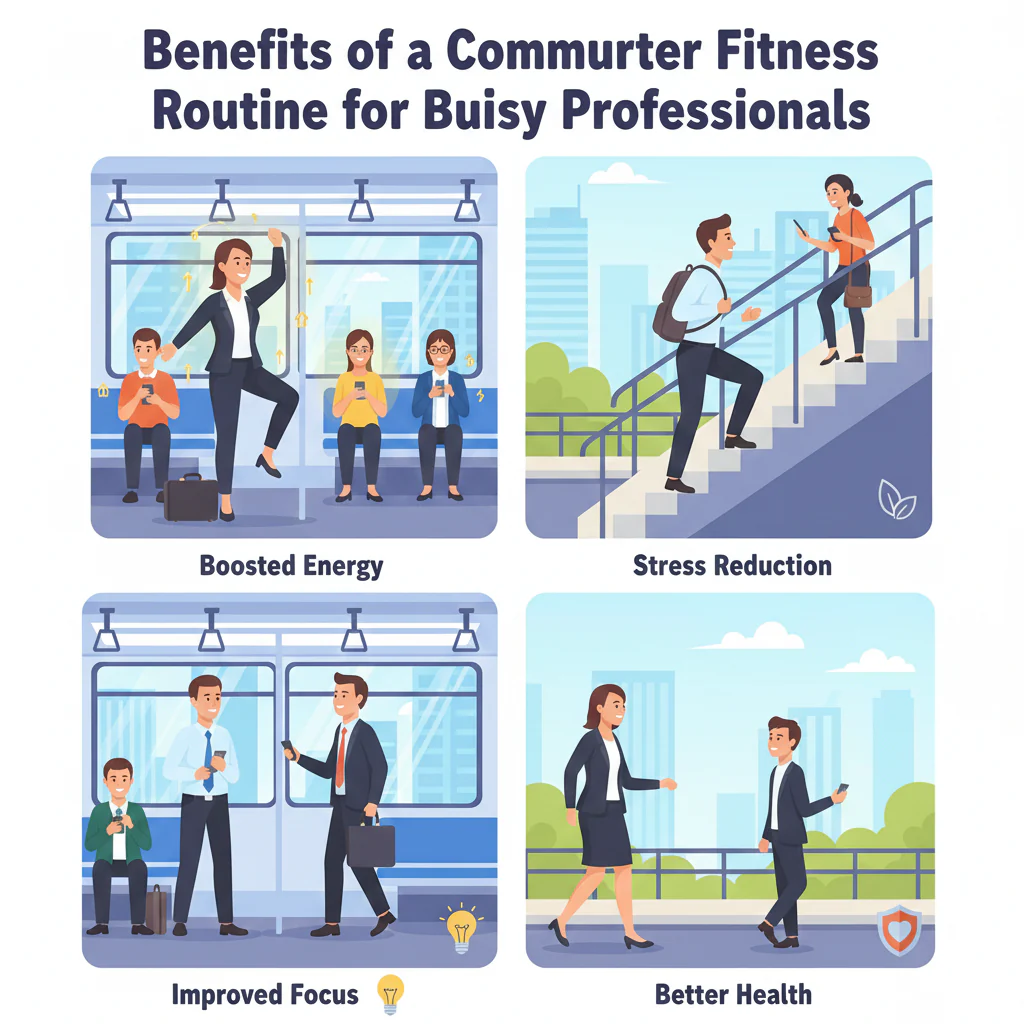
Benefits of a Commuter Fitness Routine for Busy Professionals
For a lot of busy professionals it might seem like they don’t have any time for exercise at all. The great thing is, however, that being physically active isn’t strictly about going to the gym all the time. Just a commuter fitness routine would enable you to incorporate some light movements into your day through traveling. Doing small physical exercises while you are on the bus, train, or walking can certainly bring a surge of energy, calm your nerves, and get your posture right. These small habits can change your body a lot in the long run and at the same time, you will be more concentrated and get more things done during the day.
Key Points:
- Comes to your rescue by increasing your energy and making you feel less tired through your work hours.
- Corrects your posture and trains your body to remain supple whether or not you have been sitting for a long time.
- Less stress and an easier mind to focus thanks to your clear and refreshed mind.
- Maintaining a healthy weight.
- and keeping your metabolism active.
- Helps you to get used to exercising even when your schedule is pretty hectic.
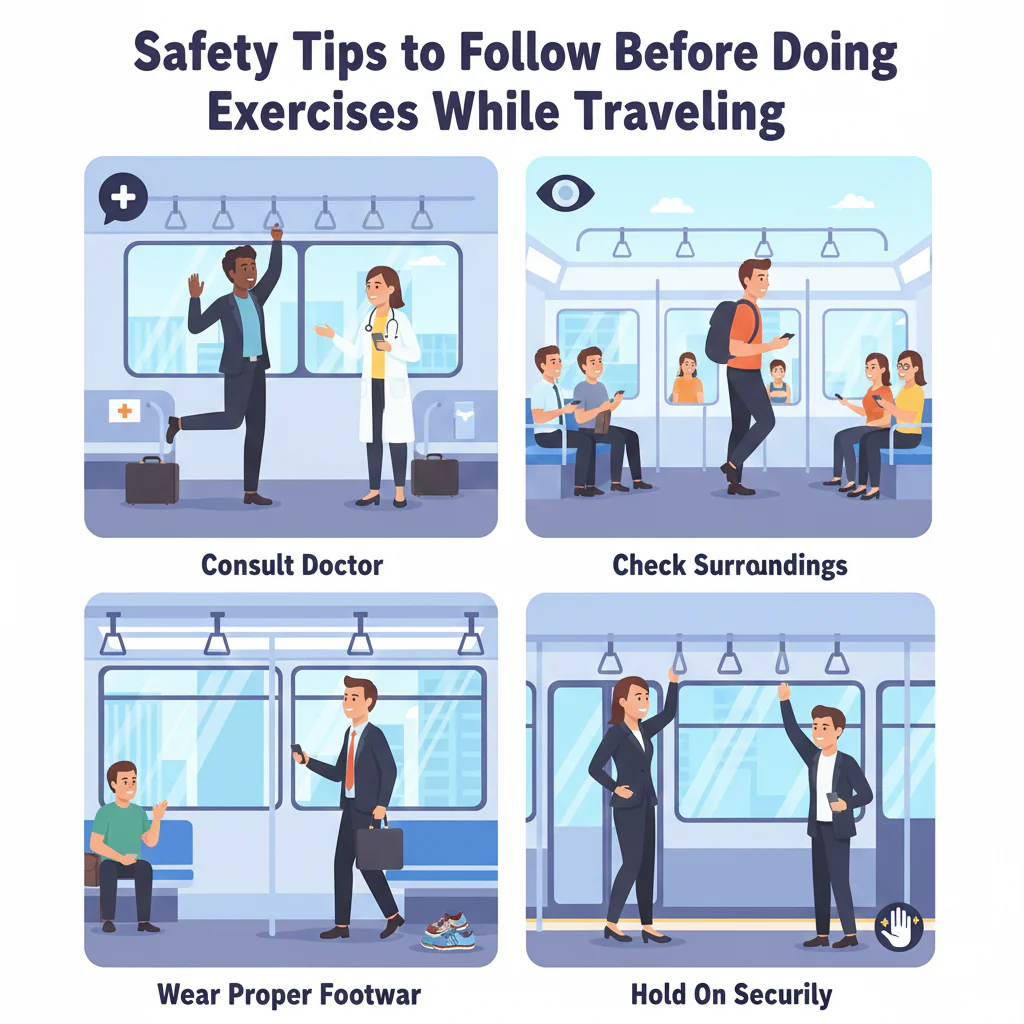
Safety Tips to Follow Before Doing Exercises While Traveling
Working out when you are traveling can be an excellent attempt to keep moving, however, the foremost thing should constantly be your safety. Minor actions are good, but the main thing is to consider the environment around you and heed your body. Being aware of posture, space, and balance will keep you from getting extra tension or hurting yourself. You can have fun with your commuter sessions and lastingly making your daily traveling time if you just quickly learn a few safety tips.
Key Points:
- Be vigilant about your environment to prevent getting hurt or falling.
- Begin gently and pay attention to your body—don’t force yourself too much.
- For safety, use a sturdy surface or something to hold on if you require assistance with your balance.
- Put on comfortable garments and shoes that give you good support.
- Stay away from movements that might endanger you or the people around you when there are a lot of people.
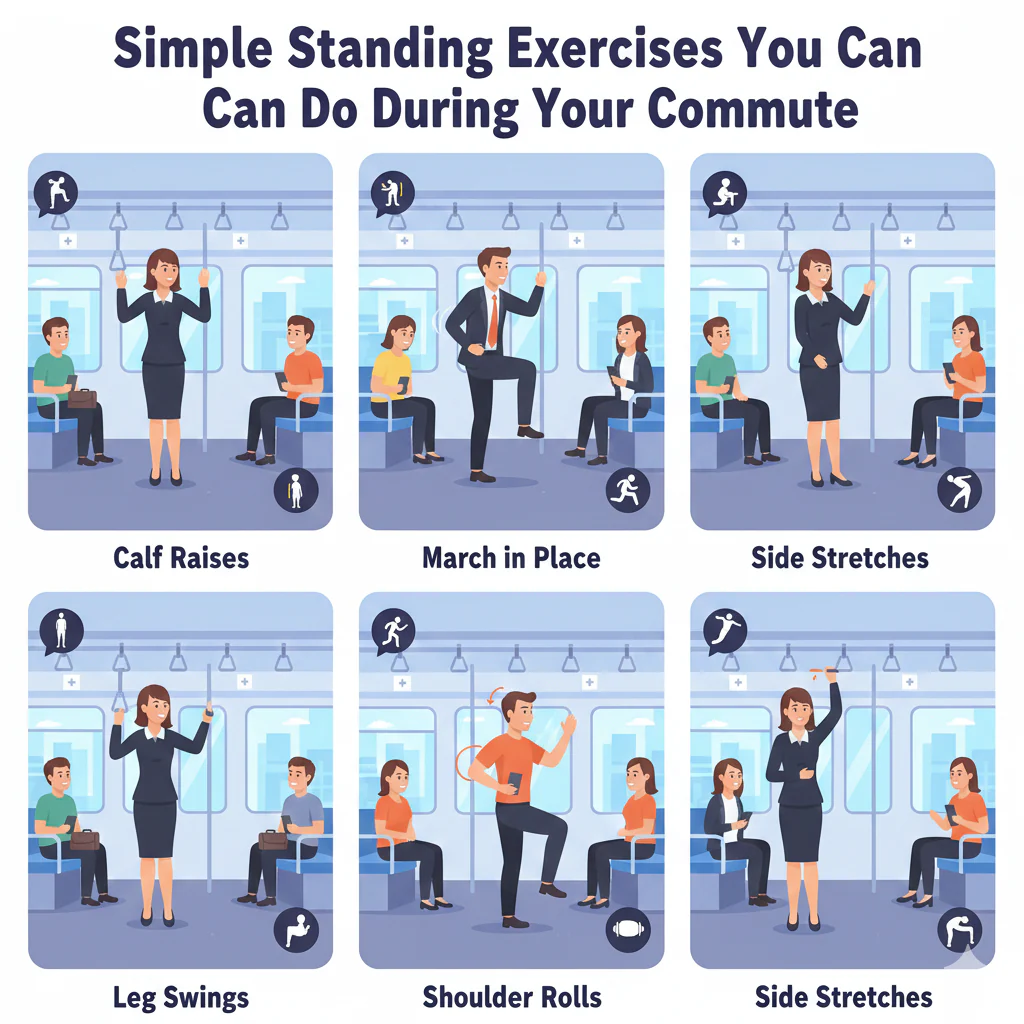
Simple Standing Exercises You Can Do During Your Commute
A few basic exercises can be discretely performed even on a bus, train or waiting at a bus stop. Just a few of the standing body movements are simple, do not need any equipment, and will help you get rid of the symptoms of bad circulation, stiffness, and muscle fatigue. Eventually, the time you spend doing the movements on the way to work will be worth it, as you will be energised and cheerful enough to go to work.
Standing Exercise:
| Exercise | How to Do It (Friendly Version) |
| Calf Raises | Stand tall, lift your heels off the ground, then slowly lower them back down to give your calves a little workout. |
| Leg Swings | Gently swing one leg forward and backward to loosen up your hips and get your legs moving. |
| March in Place | Lift your knees one at a time like you’re marching—this helps get your blood flowing and wakes up your legs. |
| Shoulder Rolls | Roll your shoulders forward and backward to shake off tension and relax tight muscles. |
| Side Stretches | Stretch your arms overhead and lean side to side to loosen your torso and sides. |
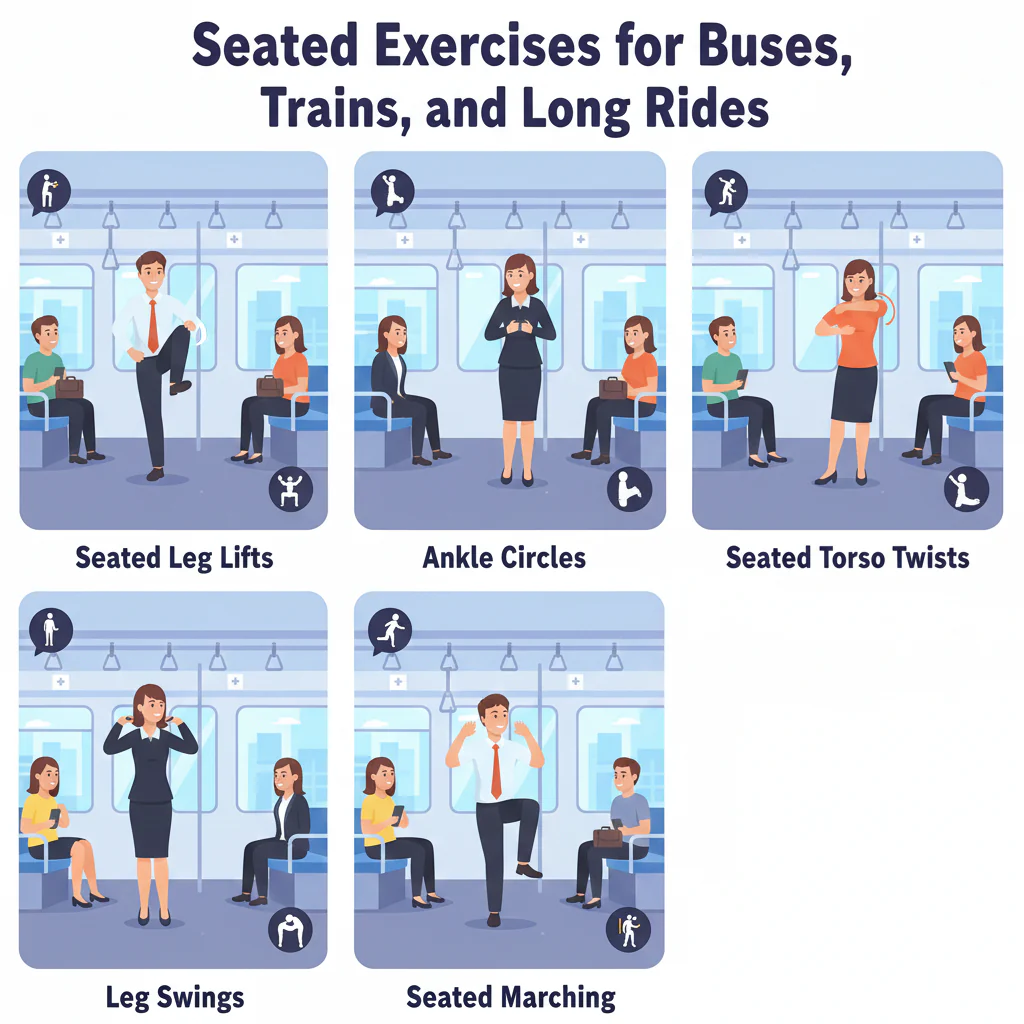
Seated Exercises for Buses, Trains, and Long Rides
Travelling long distances either by bus or train can be quite a challenge in terms of keeping up with comfort and avoiding blood circulation issues. The best way for me to make myself relaxed is to do some easy seated exercises. Something as simple as ankle circulation increases the flow of blood; spin your feet around in a circle a few times. OurPuncture likewise, knee raises where you gently pull the knee to your stomach to stretch the areas around your hips. Also, the shoulder roll is another exercise that can effectively remove the tightness felt during the trip. Besides providing extra comfort, these exercises also help to give you a better sense of a traveling well-being on your trip.
Seated Exercises:
| Exercise | How to Do It |
| Seated Leg Lifts | When seated, extend one leg straight out, keep it elevated for a few seconds, then bring it down. Do the same with the other leg to increase your thigh muscle strength. |
| Ankle Circles | Lift one foot a bit off the ground and make circles with your ankle slowly. Change the direction and do the same to the other foot for better blood flow. |
| Seated Torso Twists | Sit tall and gently twist your upper body to the left and right, keeping your core engaged. Great for loosening your back. |
| Shoulder Shrugs | Keep your torso straight and slowly rotate your upper body towards the left and the right, maintaining tension in your abdominal muscles. Excellent for releasing your back muscles. |
| Seated Marching | Lift your knees one at a time as if marching in place while seated to get your legs moving and blood flowing. |
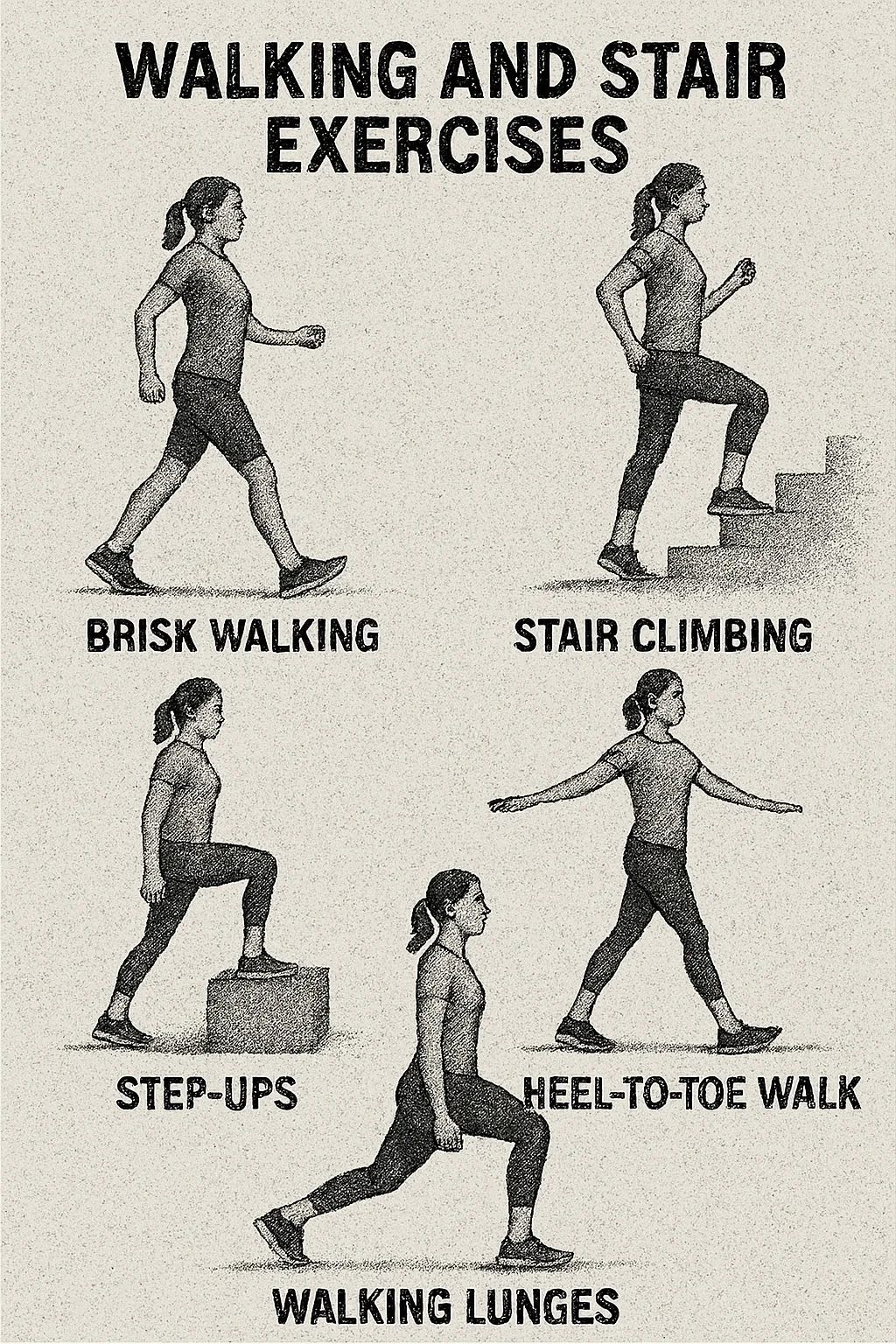
Walking and Stair Exercises for Office Commutes
Walking to your office or climbing stairs during your commute is a really simple and easy way to stay active without having to change your routine. Such movements are natural, require no extra time, and can very quickly add up to quite a bit of physical activity. By making everyday activities such as walking faster or going upstairs your light exercises, you will be able to develop endurance, get stronger legs and increase your energy level around the time of work.
Suitable Exercises:
| Exercise | How to Do It |
| Brisk Walking | Walk at a pace a little bit faster than usual to increase your heart rate and energize your body. |
| Stair Climbing | Try to take the stairs instead of elevators whenever you can to work out your legs and increase your endurance. |
| Step-Ups | Carefully go up and down on a stair or curb, holding onto a railing if you need some support for balance. |
| Heel-to-Toe Walk | When you walk, try to put your heel down first and then roll your foot onto your toes to help with your balance and get your posture right. |
| Walking Lunges | Take big steps ahead and slowly lower your body to use your thigh and butt muscles during the walk. |
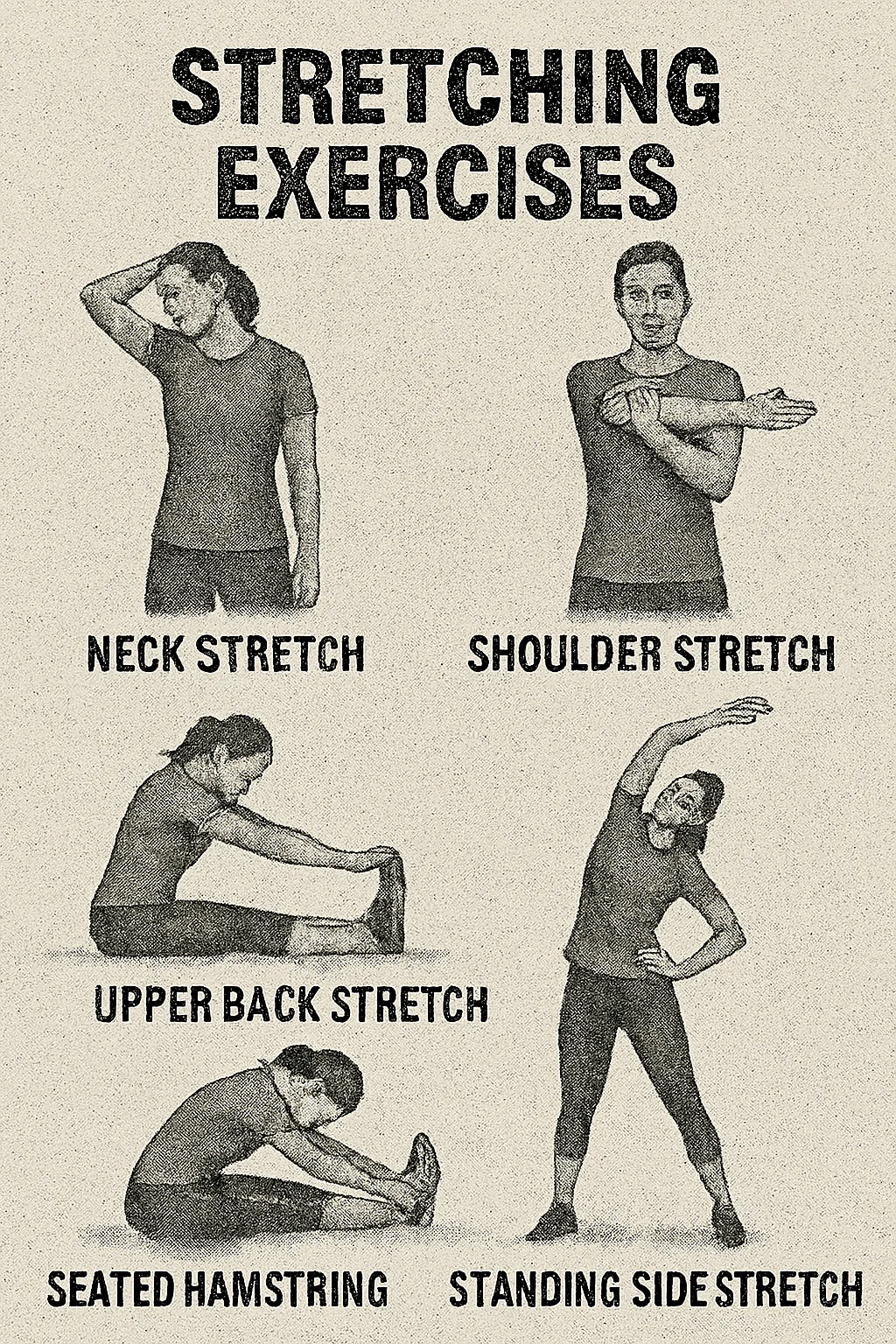
Stretching Exercises to Reduce Stiffness During Travel
The fact is that traveling, especially for prolonged periods, can often cause discomfort and tightness. To overcome this, I propose to include some easy stretching exercises as part of the usual. Start the sequence with slow neck movement to relieve tension, and then proceed to shoulder hinches and arm stretching exercises to keep the muscles elastic. Take a break to stretch if that helps your back and legs. Through sitting down you can energize your legs through the use of ankle important and leg extension exercises. Through utilizing stretches during your travel routine, you are able to keep the body at comfort and prevent stiffness, and thus guarantee a more enjoyable trip.
Stretching Exercises
| Stretch | How to Do It |
| Neck Stretch | Slowly tip your head in one direction and keep it there for a couple of seconds, after that return to the start position and do the other side to completely relax the neck muscles. |
| Shoulder Stretch | Cross one arm over your chest and grab it with the other hand to loosen the muscles around your shoulders. |
| Upper Back Stretch | Hold your hands together in front of you and round your upper back slightly to stretch the upper spine. |
| Seated Hamstring Stretch | You can stretch the back of your thigh by extending one leg while sitting and reaching the toes with your hand. |
| Standing Side Stretch | Lift one arm over your head and lean towards the side opposite to the raised arm to stretch your back and sides. |
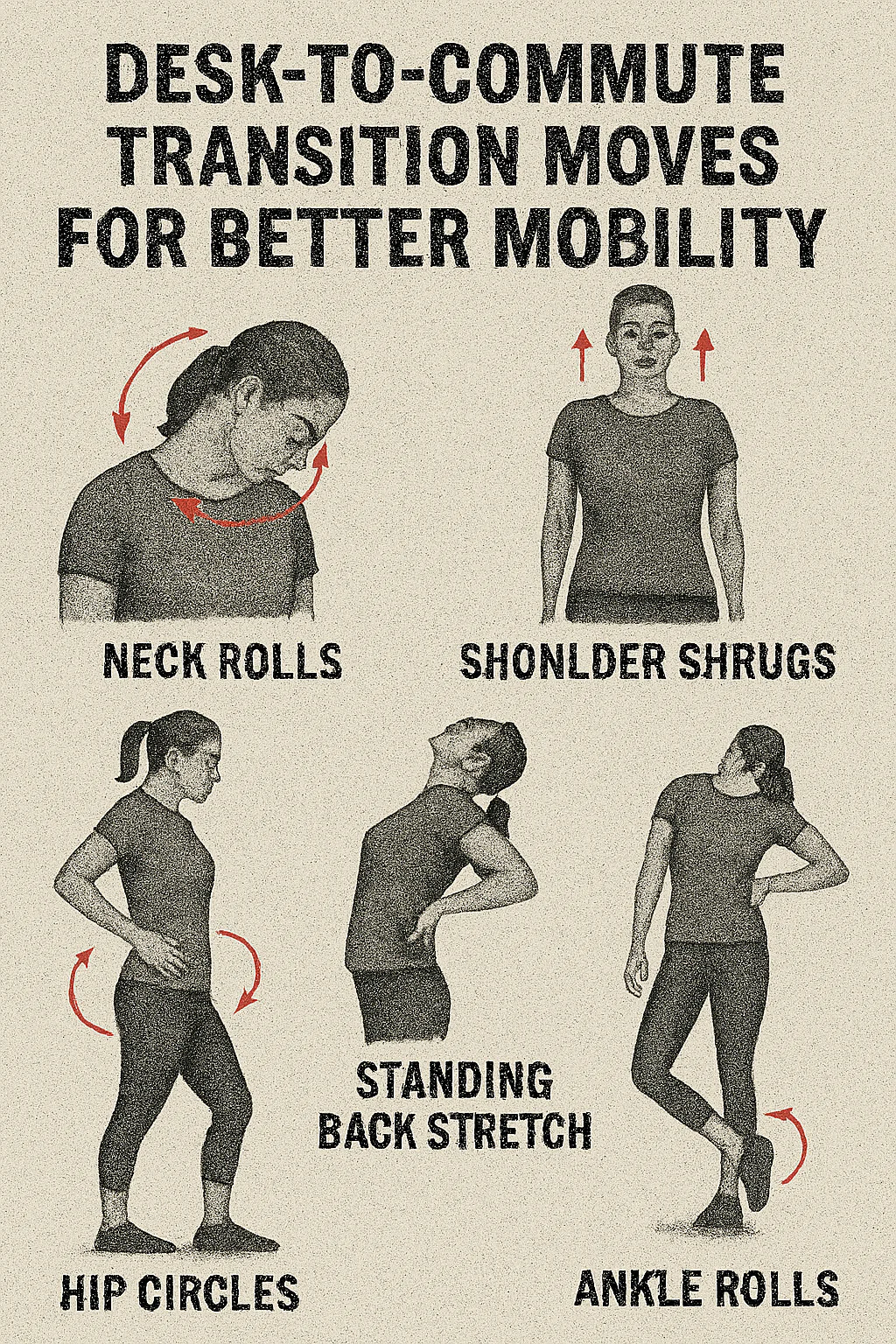
Desk-to-Commute Transition Moves for Better Mobility
Often when you stay at a desk for many hours, your body is going to be stiff and it will be kind of slow when you finally get up to go. If you do a few gentle movements before you start your commute, your body will be more loosened up and it will be easier for you to move.
These easy transition exercises will stimulate your muscular system, bring about better flexibility and lessen any tightness you might have in the back, hips, and shoulders. They will take you only a few minutes and can make walking, standing, or traveling feel a lot easier.
Exercises For That:
| Exercise | How to Do It |
| Neck Rolls | Gently roll your head around in a circle to release the tension in your neck and shoulders. |
| Shoulder Shrugs | Lift your shoulders up toward your ears, then let go and drop them to release tension. |
| Standing Back Stretch | Put your hands on your lower back and try to lean backward gently to extend your spine. |
| Hip Circles | Gently moving your hips is a great way to unlock them if they are stiff after you’ve been sitting for hours. |
| Ankle Rolls | Rotate your ankles one by one as a way of getting your legs ready for walking or standing. |
How Often Should You Do a Commuter Workout Routine
The walking exercise you do on your way to work doesn’t need to be long or daily in order to yield good results. The primary thing that weighs is consistency, not being super-intense. Imagine how great it would be if you added a few extra steps to your working day journey. Your body would therefore remain in good condition and be more flexible.
- During your commute make an effort to do some light exercises 3 to 5 days.
- Begin with 5 to 10 minutes and gradually add more time if you feel good.
- If you feel tired or sore, take rest days.
- Focus on doing gentle movements rather than heavy exercises.
- Consistency is more important than doing a lot at once.
Pro-Tips:
- Commuter fitness routine is easy way to get fit and healthy by daily doing small moments in your daily Travel.
- Fitness routine for office workers are necessary to give mobility in the body with daily desk job.
- Workout during commute may fit you and give relaxation for entire all hours.
- Daily commute exercises may save you from stiffness of neck, hip and other body parts.
- Stay active while traveling may energize you more in daily commute routine.
- Easy activities like walking, brisk walking, and slow stretching support fitness for busy professionals.
- Simple exercises during travel is must. It may save you from fatigue and tight muscles.
- Office commute workout may fit you without Gym or any extra time spending on workouts.
- Travel-friendly exercises save your time, stays you healthy quick and convenient.
- Commuters can benefit from a no-gym workout routine by doing small movements every day.
- Daily night exercises for daily routine may help you to maintain over all health.
FAQs
1. What is a commuter fitness routine?
A commuter fitness routine is basically a string of easy exercises and moves you integrate into your daily commute to keep yourself fit and healthy while not having to use extra time or go to a gym.
2. Why is it important to stay active during the daily commute?
When you include physical activity during your commute, it can help in several ways: first, you will be less stiff, secondly, your posture will also get better, thirdly, you will have more energy and long sitting will not have its negative effect on you.
3. What benefits does a commuter fitness routine bring to busy professionals?
Commuter workouts help in raising the vitality, alleviating the stress level, promoting the flexibility, enabling healthy weight regulation, and keeping the busy professionals physically active even if they have a desk job.
4. Are commuter exercises safe to do while traveling?
Yes, if you stick to safety guidelines such as being aware of your surroundings, choosing stable surfaces, and doing gentle movements that are suitable for your space.
5. Are there any standing exercises that can be performed during a commute?
Simple standing exercises such as calf raises, leg swings, marching in place, shoulder rolls, and side stretches can be easily done while on the bus, train, or even at a waiting area.
6. Can I do exercises while seated on buses or trains?
Yes, doing exercises like leg lifts, ankle circles, torso twists, shoulder shrugs, and marching on the spot while being seated will help you stay active and avoid getting stiff during a long trip.
7. How can I use walking and stairs for commuting fitness?
You can easily integrate fitness into your commute by engaging in brisk walking, stair climbing, step-ups, heel-to-toe walking, and walking lunges. These activities do not require any additional equipment.
8. What stretches are effective in reducing stiffness during travel?
Neck stretches, shoulder stretches, upper back stretches, seated hamstring stretches, and standing side stretches can assist in freeing up your body and increasing your flexibility while on the go.
9. What are the desk-to-commute transition moves for better mobility?
Simple moves such as neck rolls, shoulder shrugs, standing back stretches, hip circles and ankle rolls are very effective in loosening a body that has been sitting at the desk and also preparing it for going out.
10. How frequently can I utilize a commuter workout routine?
Generally, small, regular movements during your commute along with 3-5 days a week of such workout would give you the highest results. Therefore, short daily sessions are more productive than infrequent long workouts.
11. What are some good ways for me to handle my travel workout exercises consistently?
Set reminders to do your exercises, keep your workouts basic and easy, tie your workouts with your traveling habits and prioritize short, regular sessions so that commuter exercises become rap art of your daily routine.
|
Written by [Moizza], Fitness Expert at Gym Glam.
|